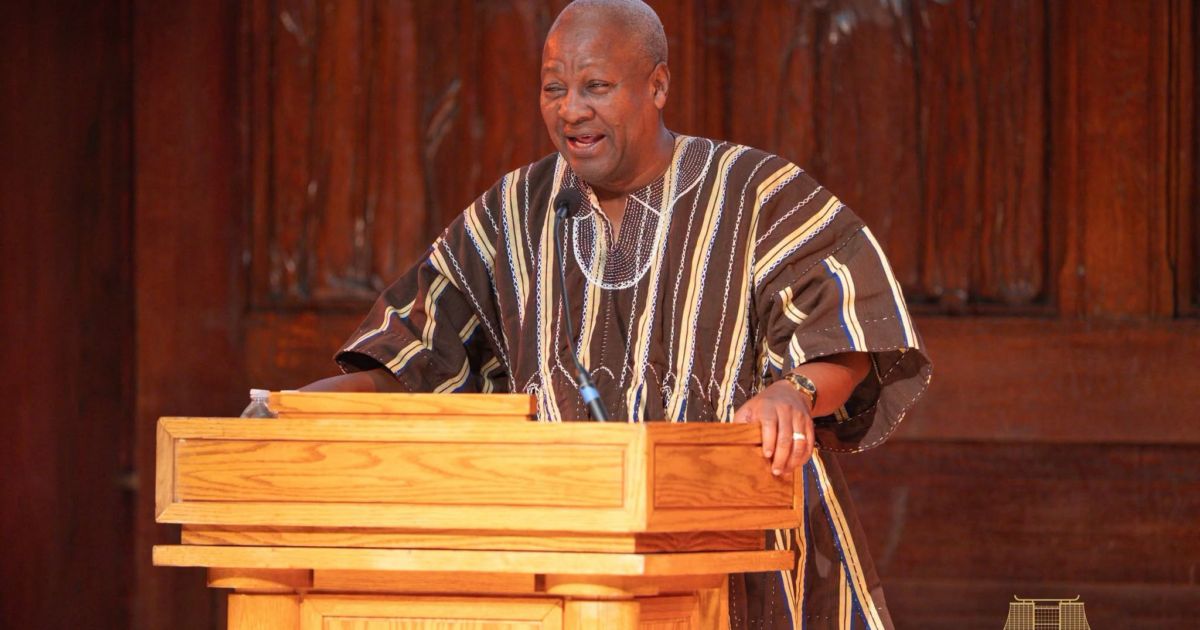

On 25 September 2026, President John Dramani Mahama was in New York for the United Nations General Assembly when a session at the Council on Foreign Relations revealed the details of a proposed health compact from the United States. The compact, intended to replace the funding lost when USAID was shut down in 2025, would have required Ghana to share its pathogen profile, medical records and other health data for 25 years and to provide a fixed amount of counterpart funding each year.
When the proposal reached the Cabinet, several provisions were flagged. The United States would not allow medicines and medical products brought in under the programme to be inspected by Ghana’s Food and Drugs Authority, and the agreement would allow Washington to cut or stop its funding if Ghana failed to meet its counterpart contributions. The Cabinet rejected the compact, a decision the President described as humiliating. He directed the Minister of Health to inform the US Ambassador that Ghana would not sign.
Ghana had already walked away from similar talks in April 2026, as reported by Reuters and the Associated Press. The new offer, however, highlighted the data‑sharing clause and the lack of inspection authority, which the President said had not been previously discussed. The American State Department’s America First Global Health Strategy, published on 18 September 2025, outlines five‑year Memoranda of Understanding that aim to reduce foreign aid while increasing national contributions. Kenya was the first country to sign on 4 December 2025, and as of 11 September 2026, 35 countries have signed, with a total value of about US$24.1 billion over five years.
Health aid had been a pillar of Ghana’s system for more than two decades, covering malaria control, maternal and child health, nutrition, family planning, HIV testing and treatment. In 2024, the United States provided Ghana with US$219 million in assistance, of which US$96 million went to health. The 2025 freeze of foreign aid left Ghana facing a US$78 million shortfall, or as some reports put it, up to US$156 million when related programmes are counted. In response, Ghana removed the cap on the National Health Insurance Levy and launched the Accra Reset, a strategy to strengthen health sovereignty and reduce dependence on external donors.
Public Citizen and other health researchers have obtained the State Department’s standard template for the agreements. The template requires counterpart funding from the country’s own money, allows the United States to cut funding if the country falls short, and mandates a 25‑year data‑sharing agreement. The Ghanaian government’s rejection of the compact reflects concerns that such terms would compromise national health governance and sovereignty.
Ghana will continue to seek alternative funding sources while maintaining its commitment to free primary health care and the Ghana Medical Trust Fund, MahamaCares. The international community will watch closely as more countries evaluate the implications of the America First Global Health Strategy.