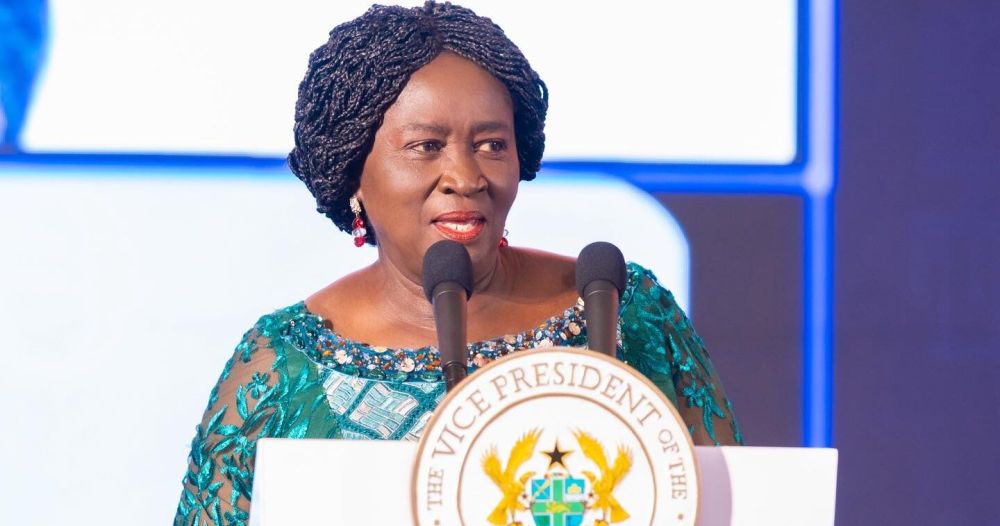
Vice President Prof. Naana Jane Opoku‑Agyemang announced that Ghana will intensify its engagement with the African diaspora as part of the global reparatory justice movement. The statement was made during a ceremony in Accra after the United Nations General Assembly adopted Resolution 82/50 on March 25, which recognised the trafficking and enslavement of Africans as the “gravest crime against humanity.”
Speaking at the event, Prof. Opoku‑Agyemang said the resolution “must now be followed by sustained action, including stronger historical, cultural and economic links between Africa and its diaspora.” She added that Ghana would “continue to strengthen the relationship between Africa and her diaspora through historical understanding, cultural exchanges of different kinds, investments and sustained engagement.”
The resolution, a product of Ghana’s leadership with support from the African Union, Caribbean partners and the wider international community, has brought greater clarity to the historical record and elevated the issue to the highest level of international deliberation. “Recognition creates responsibility,” she said, echoing the sentiment that acknowledgement must translate into concrete steps.
Prof. Opoku‑Agyemang’s remarks followed the Next Steps Consultative Conference on Reparatory Justice, convened by former President John Dramani Mahama in June. The conference focused on education, preservation, restitution, legal pathways and sustained international engagement. She acknowledged that the path toward reparatory justice would be complex, noting that “there will be differences about the form that justice should take and how responsibility should be addressed.” However, she warned that disagreements should not delay action: “Complexity is not a good reason for inaction.”
While the UN declaration cannot restore lives lost or return generations separated by the slave trade, it provides a shared foundation for the next stage of the campaign. Prof. Opoku‑Agyemang said Ghana’s engagement must extend beyond remembrance to sustained cooperation that strengthens the historical and contemporary relationship between Africa and its people abroad.
Ghana’s next steps will involve concrete programmes aimed at fostering cultural exchanges, investment opportunities and educational initiatives that bridge the continent with its diaspora. The country is poised to translate the UN’s recognition into tangible responsibilities and collaborative projects moving forward.