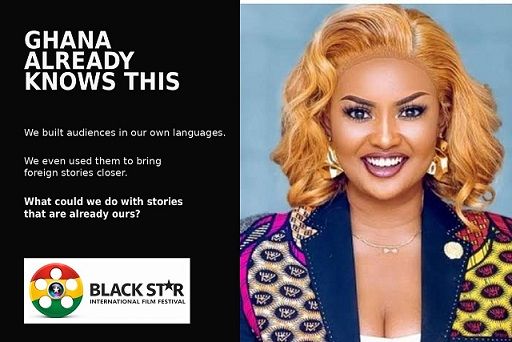
At the 2026 BSIFF, African filmmakers and industry insiders are debating a simple yet profound question: could telling more of our stories in the languages our people actually speak bring our cinema closer to them? The conference, held in Accra, has seen a growing number of filmmakers emerging as technology makes production easier and distribution wider, yet the core issue remains whether Africans are watching African films deliberately, not just by chance.
“We are making films,” a BSIFF representative said, noting that while African cinema is traveling to festivals worldwide and streaming platforms are opening new doors, the audience question persists. “We mean watching them deliberately. Looking for them. Paying for them. Going to the cinema for them. Talking about them. Arguing about them. Waiting for the next one.”
In exploring potential answers, the conference turned to global examples. Korean cinema has thrived in its native language, with Korean films and series gaining international audiences through subtitles and dubbed versions. China’s 2026 Mandarin‑language series Pursuit of Jade achieved over 4 billion effective online plays, was released internationally with subtitles in 14 languages and five dubbing options, and entered Netflix’s weekly Global Top 10 for non‑English television. The producers did not switch to English to reach a wider audience; they kept the story’s original language and translated access to it.
“What if we separated those two things in African cinema too?” the BSIFF panel asked. “Instead of asking: What language should I make this film in so that everybody can understand it? What if I asked: What language does this story belong in? And then: How do I make sure everybody else can enter it?”
Ghana offers a domestic experiment. Ghanaian radio and television routinely broadcast in Twi and other local languages, covering politics, relationships, religion, entertainment and news. These programs attract listeners and viewers who participate actively. Broadcasters have also localized foreign soaps and series from Mexico, India and elsewhere by dubbing and subtitling, turning them into part of everyday Ghanaian conversation. This suggests that language can shorten distance and bring stories closer to audiences.
Language, however, is not a silver bullet. “If local language were enough by itself, Ghana would already have solved this problem,” a panelist noted. Kumawood, a Twi‑language film sector, has built stars and a screen culture, but scaling beyond Kumasi to Accra, Uganda and beyond remains a challenge. The debate therefore turns to quality and market strategy: how to produce compelling, high‑quality films in local languages that can compete globally while still resonating with domestic audiences.
As the conference closes, the consensus is clear: language can be a powerful audience strategy, but it must be paired with strong storytelling, production values and distribution plans. The next steps will involve testing local‑language releases, measuring audience engagement, and refining the balance between cultural authenticity and commercial viability.