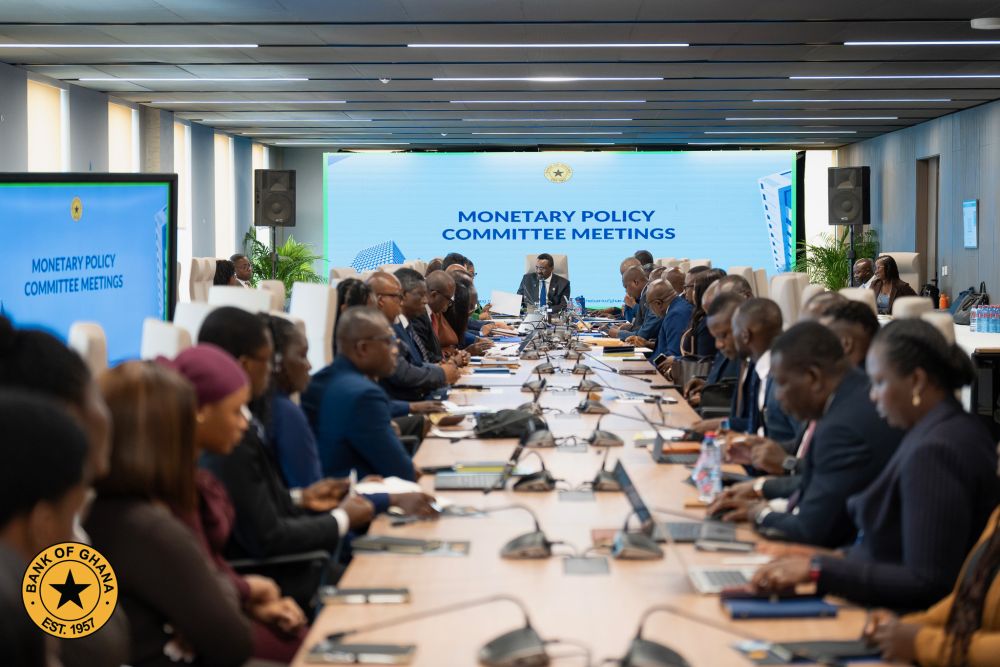
At the opening of the Bank of Ghana’s 132nd Monetary Policy Committee meeting, Governor Dr. Johnson Asiama warned that Ghana’s external position could face pressure in the coming months. He cited a projected current account deficit, declining reserves and a pause in gold exports by the Ghana Gold Board since mid‑August as key risks to the country’s external buffers.
Ghana’s gross international reserves currently provide 4.2 months of import cover, but the Bank says the country’s external position could come under pressure in the coming months. The developments require closer monitoring, particularly ahead of the usual increase in foreign exchange demand in the fourth quarter.
“Three particular issues will shape our discussions during this meeting, each carrying its own risk. Rebuilding reserves will be a key priority for the Bank in the coming months,” Asiama said.
The reserve outlook is emerging as one of the key considerations for the MPC as it weighs the broader risks facing the economy and assesses the appropriate monetary policy stance. Inflation is another major issue on the Committee’s agenda.
Headline inflation rose from a low of 3.2% in March to 5.0% in August, representing a cumulative increase of 1.8 percentage points over five months. Dr. Asiama noted that inflation remains below the lower bound of the Bank’s medium‑term target band, but cautioned that the direction of travel is now upward.
The key question for policymakers, he said, is whether the expected increase in inflation in the coming months will be a temporary adjustment driven by higher energy prices and administered tariffs, or whether it could develop into more persistent price pressures and affect inflation expectations.
The MPC is therefore weighing two important developments: renewed inflationary pressure on one side and a weakening external position on the other. The Committee will also assess whether the current 14% policy rate remains appropriate given the changing inflation outlook, reserve position and global economic environment.
Its assessment will be closely watched by financial markets and businesses, as the policy decision will provide an indication of how the Bank is balancing price stability, external buffers and economic activity.