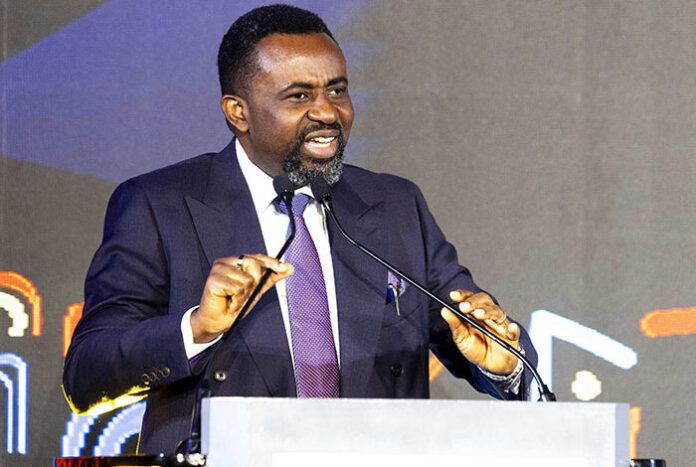
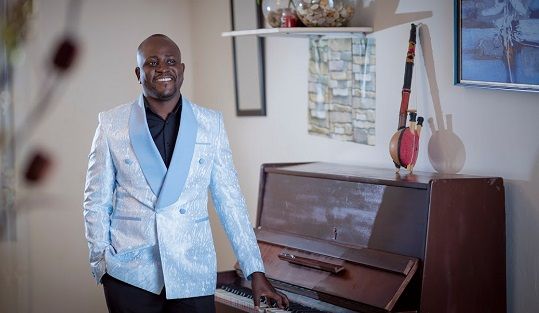
Alfred Patrick Addaquay was promoted to Associate Professor of Musicology in the University of Ghana’s Department of Music on 1 April 2026, after a rapid rise from Lecturer in November 2021 to Senior Lecturer in February 2024. The promotion came four years and five months after his university appointment, a pace that reflects his long‑standing engagement with music both on stage and in research.
Born in Kumasi, Addaquay’s musical journey began in school when a friend suggested he try the keyboard for a choir. A music teacher, A. E. Amankwah, was impressed, and the headmistress encouraged his mother to nurture his talent. The boy’s parents never discouraged his ambitions, allowing him to pursue music alongside mathematics.
He completed a PhD in Music Theory and Composition at the University of Cape Coast in 2020, producing a doctoral work titled Sanku Concerto that blends piano with indigenous Ghanaian percussion such as Gabada, Adowa and Kpanlogo. The piece, preserved in the university’s repository, explores how traditional rhythms can converse with Western forms without one becoming mere decoration.
As a performer, Addaquay is known as a classical and art music keyboardist, singer and composer. His university profile lists works including the oratorio Laudateur Christus, the African cantata Afe Nsakrae, the Kyekyekule Sonata and the Sanku Concerto. These compositions inform his scholarly questions about the interaction of musical traditions.
His research spans choral writing, vocal practices and the philosophy of music education. Articles such as “Sounding Identity” and “Reclaiming the African Voice” examine how vocal techniques reflect cultural memory. In “The Analyst’s Dilemma,” he calls for humility and transparency in music criticism, while “Beyond the Blueprint” argues for research frameworks that accommodate composition, performance and analysis as equally valid scholarly pursuits.
In teaching, Addaquay integrates listening, singing, rhythmic demonstration, improvisation and notation, encouraging students to draw from both written texts and oral traditions. His approach reflects his belief that the method should follow the question, whether it be composition, analysis or ethnography.
Looking ahead, Addaquay plans to expand his research on how African musical forms can inform contemporary composition, and to mentor a new generation of Ghanaian musicians who can navigate both performance and scholarship.