The World Health Organisation announced on October 8 that Alimbongo health zone in North Kivu province has reported its first Ebola cases, bringing the total number of affected zones in the Democratic Republic of the Congo to 64 across seven provinces. As of October 6, four confirmed cases, including two deaths, were recorded in Alimbongo.
The outbreak is caused by the Bundibugyo strain of the Ebola virus. WHO figures show 8,728 confirmed cases and 4,205 deaths nationwide, with a case‑fatality ratio of 48.2 %. The province of Ituri remains the worst‑affected, while North Kivu is accounting for a growing share of new infections.
Kenya confirmed its first imported case on October 6. The patient, a Kenyan citizen who had lived in the DRC, fell ill there, received treatment at several facilities, then travelled by road to Kampala, Uganda, before flying to Nairobi on October 3. The patient was isolated and tested positive for Bundibugyo virus but died on October 5 despite supportive care.
Kenyan authorities identified 28 contacts, including family members and health‑care workers, and the WHO has been tracing passengers and crew from the flight to Nairobi. Public‑health measures in Kenya and Uganda now include contact tracing and enhanced surveillance.
On October 8, a suspected case in Kenya’s Wajir County tested negative, easing fears of a second case, though monitoring continues. The imported infection underscores the need for coordinated surveillance and community engagement across borders.
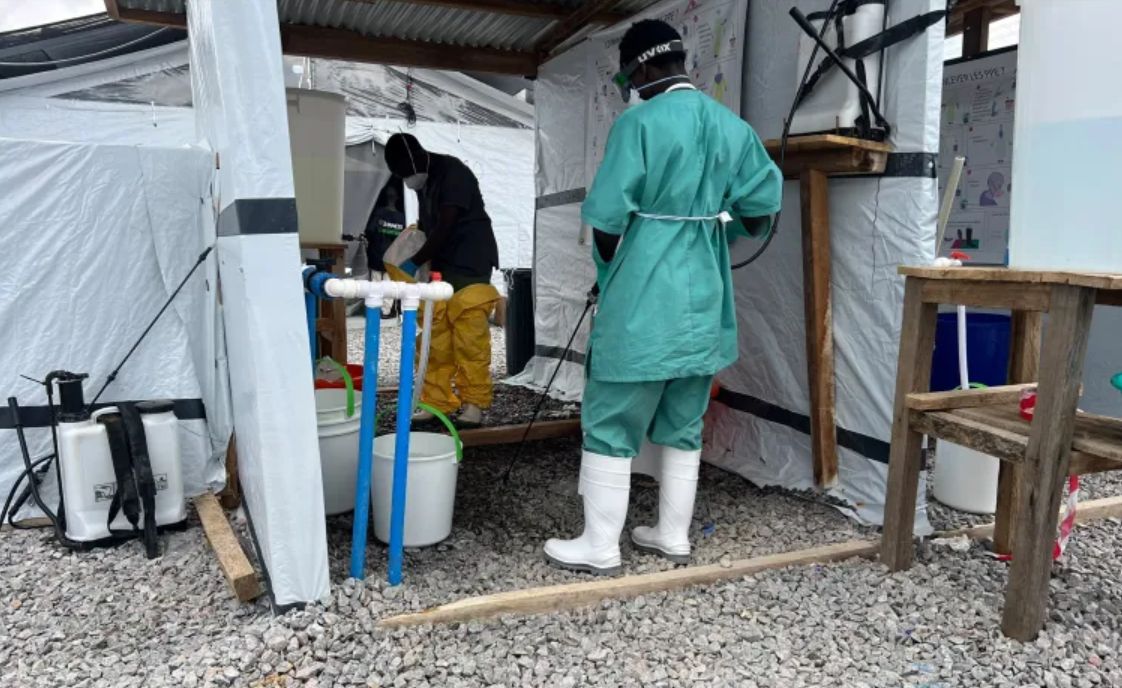
In the DRC, response teams face limited treatment capacity, insecurity and community mistrust. MSF reported that nearly 40 % of new cases nationwide are in North Kivu, and that 34 % of confirmed patients are treated in non‑specialised facilities lacking adequate resources. The organisation warned that insufficient beds and sub‑standard care could increase transmission risks.
Community leaders in Beni and Butembo have called for stronger cooperation and trust to prevent further spread. The WHO is following up 80.4 % of identified contacts, below its target of 85 %. The Africa CDC has urged a community‑centred response with active case finding, systematic tracing and daily follow‑up of exposed individuals.
With no approved vaccine or specific treatment for Bundibugyo virus, early detection, supportive care and infection prevention remain the cornerstone of the response. As the outbreak expands into new health zones and treatment facilities struggle, authorities face the dual challenge of containing transmission while maintaining public trust.
What to watch next: WHO and Africa CDC will continue to monitor contact tracing coverage and the effectiveness of community engagement strategies, while health facilities in North Kivu work to expand treatment capacity.