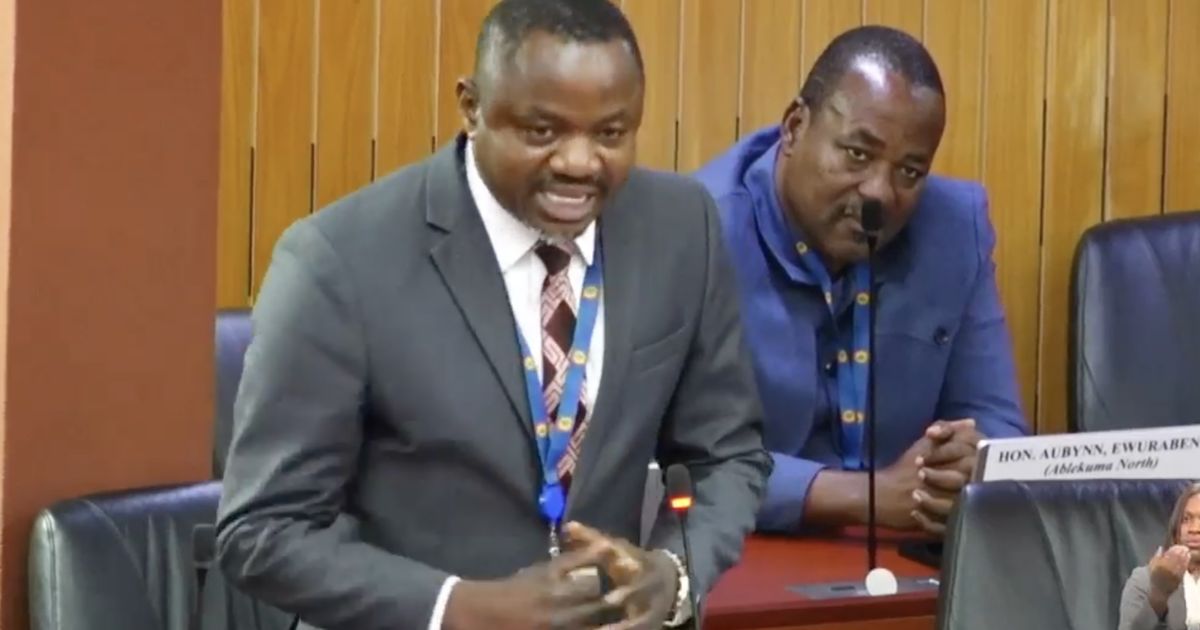
During the 2027 Budget debate in Parliament on Wednesday, November 18, 2026, Member of Parliament for Kade Constituency Alexander Agyare questioned the Bank of Ghana’s foreign‑exchange interventions, saying the nearly US$13 billion used to support the cedi in 2025 raises questions about the government’s economic priorities.
As Vice‑Chairman of Parliament’s Budget Committee, Agyare contrasted the current spending with the previous NPP government’s approach, noting that the NPP kept the cedi at around GH¢14 to the US dollar while spending about US$60 million a month to maintain the rate at GH¢14.10 during the latter part of 2024.
He cited an IMF report dated August 5, 2026, that the Bank had pumped almost US$13 billion into the foreign‑exchange market in a year – an average of more than US$1 billion a month.
Agyare questioned that level of spending alongside the government’s plan to raise US$10 billion over four years for its “New Economy” programme, arguing that if one could use over US$1 billion a month, a whole four years would be needed to raise US$10 billion for the programme.
He warned that the cedi’s appreciation is becoming counter‑productive, making imports cheaper and putting local manufacturers and rice farmers under pressure, while cocoa farmers suffer from a stronger currency that reduces the local‑currency value of export earnings.
The MP called for an “optimal” exchange rate that would avoid overvaluing the cedi and better support domestic production and exports, and cautioned that heavy reliance on interventions could leave the economy exposed if an external shock weakened foreign‑exchange inflows.
Agyare suggested that funds used to support the currency could instead have gone toward agriculture, trade and road construction. He also criticised the government’s allocation for the National Inter‑Ministerial Coordinating Committee on Illegal Mining (NAIMOS), noting that GH¢150 million was budgeted in 2026 but only GH¢16 million had been paid, while the 2027 Budget allocated GH¢200 million.
He described the 2027 Budget as a “killer budget” and said ministers had not adequately defended it in public, pointing out that of 69 promises, only nine had been delivered, while 16 had been missed and another 16 had been re‑announced in the 2027 Budget, with 20 not reported at all.
He also questioned the government’s reliance on gold exports and its projected 5.2 percent growth rate for 2027, especially against the backdrop of the 6.2 percent growth achieved in 2026 and the administration’s stated ambition to expand the economy through its New Economy programme.
Finally, Agyare raised concerns about the proposed Women’s Bank, asking when it would begin operating and how women would access its funds, urging that if the money is available, it should be given to women without unnecessary conditions.
What follows is a continued debate in Parliament as the government responds to the MP’s criticisms and outlines its economic strategy for the coming years.