
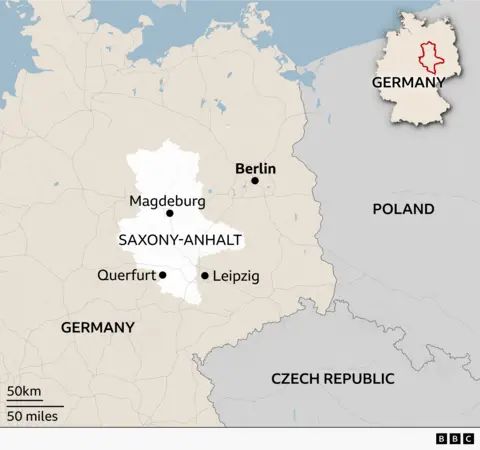
The Alternative for Germany (AfD) is poised to secure a record 44% of the vote in Saxony-Anhalt, far ahead of the Christian Democratic Union (CDU) which trails at just over 17%. With more than 97% of ballots counted, the far‑right party is on track to win 39 of the 83 seats in the state parliament, a level that would give it a mandate to govern, though it falls short of an outright majority.
Ulrich Siegmund, the AfD’s charismatic state leader, called the outcome "sensational" and urged his supporters to prepare for a swift takeover of state powers over policing, education and culture. The party’s national leaders, Alice Weidel and Tino Chrupalla, joined Siegmund in celebrating the projected victory.
No far‑right party has controlled a German state since World War Two, making the AfD’s potential rule a watershed moment. The party’s classification as "right‑wing extremist" by domestic intelligence has been rejected by Siegmund, who insists the party is a legitimate political force.
While the AfD lacks enough seats for a majority, Siegmund has declined to form a minority government, stating that new elections could bring a 50–55% majority if necessary. He remains open to working with individual MPs or other parties.
The result has drawn international attention; former US President Donald Trump shared a screenshot of the projection on Truth Social, and Russian envoy Kirill Dmitriev praised the win as historic. German political analysts describe the outcome as a signal to Berlin and a sign of the AfD’s growing influence in eastern Germany.
Voter turnout in Saxony-Anhalt was high, reaching up to 78%. Supporters in Magdeburg celebrated the results, with chants of the national anthem echoing through the streets. The CDU’s Sven Schulze conceded defeat, noting the campaign had been intense.
Opposition parties, including the Social Democratic Party (SPD), have called the result "truly dramatic" and warned that the AfD’s policies, such as a controversial plan for "remigration", could threaten social cohesion if implemented at the state level.
As the AfD prepares to take the reins, other German states will watch closely to see if the party can replicate its success beyond Saxony-Anhalt.