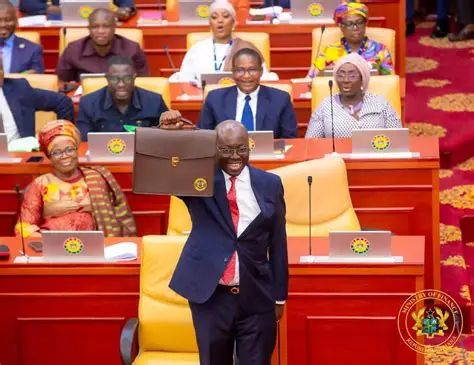
The 2027 Ghanaian budget is set to confront a fiscal dilemma, with public sector wage commitments, infrastructure spending needs and revenue mobilisation pressures all vying for limited fiscal space. Between January and July 2026, total revenue and grants reached GH¢144.57 billion, slightly below the GH¢144.95 billion target, while expenditure, including net lending, stood at GH¢147.08 billion against a programmed GH¢175.93 billion, a 16.4 % shortfall.
Capital investment lagged, with GH¢24.23 billion spent on capital projects in the first seven months of 2026—about 25 % below the programmed target. Although this was a 157.9 % increase over the same period in 2025, the shortfall raises concerns about the pace of infrastructure delivery and productive capacity expansion.
Compensation of public sector employees consumed GH¢50.55 billion between January and July 2026, 35.2 % of domestic revenue mobilised. The 2027 budget allocates GH¢104.1 billion for employee compensation, 28.4 % of total commitment expenditure, ahead of an agreed 8 % base‑pay rise and an additional 1 % for conditions of service.
Professor Robert Darko Osei of ISSER warned that fiscal consolidation must translate into tangible living‑condition improvements and job creation. He stressed that the type of growth matters, urging investments that secure employment and household welfare.
Tax analyst Francis Timore Boi cautioned that repeated labour agitations could erode fiscal discipline, suggesting that private‑sector participation in major infrastructure projects might offset public spending. He urged the government to explore private investment avenues while carefully assessing risks and fiscal obligations.
As the 2027 budget debate unfolds, the government must clarify how it will balance wage commitments, infrastructure financing and revenue mobilisation while preserving the fiscal gains recorded in 2026.