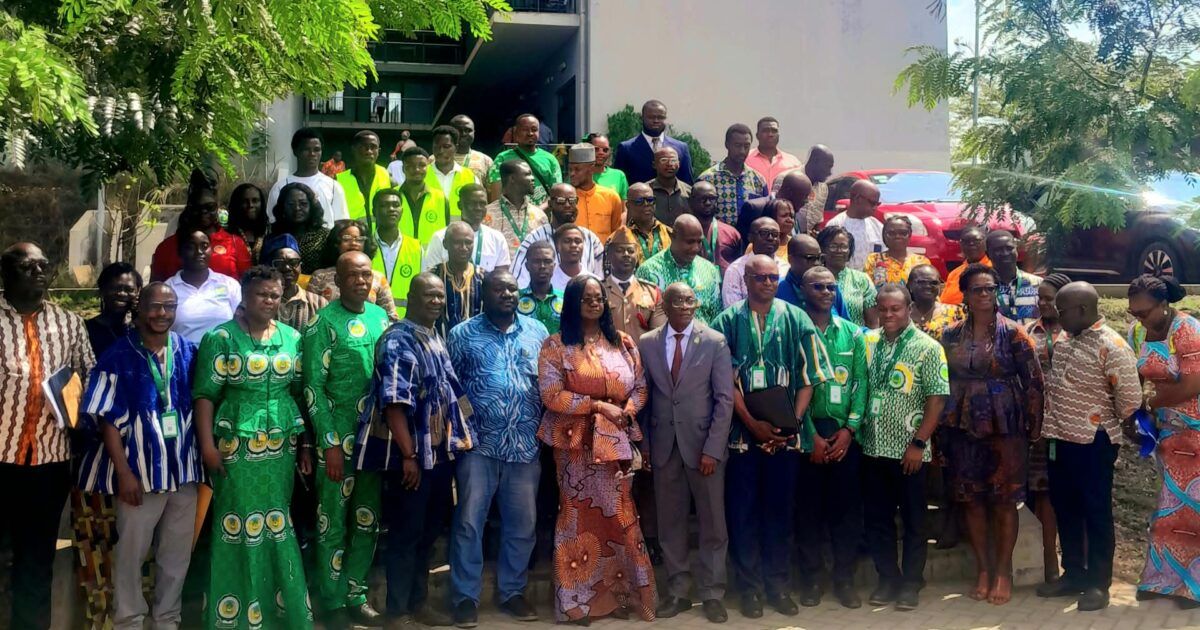
During the University of Environment and Sustainable Development’s seventh Commencement Lecture on 16 November 2026, the institution and the Environmental Protection Authority (EPA) urged Ghana to move toward a circular economy in waste management. The call, made at the UESD campus in Somanya, highlighted the country’s mounting waste challenges and the need for stronger enforcement of environmental laws, investment in sustainable recovery systems and a change in public attitudes toward waste.
Mr Joy Hesse Ankamah, Deputy Director of the Human Settlement Unit at the EPA, delivered the keynote address. He noted that Ghana generates about 0.54 kilograms of municipal solid waste per person daily, totaling roughly 6.07 million tonnes each year. He warned that inadequate collection, indiscriminate dumping and open burning continue to expose communities to pollution and health risks. “Waste is much more than refuse. It reflects our consumption patterns, governance systems, environmental values and our commitment to public health and sustainable development,” he said.
Mr Ankamah, an engineer, outlined how a circular economy could turn organic waste into compost and recycle plastics, paper, metals and glass into useful products and industrial raw materials. He called for stricter law enforcement, reliable waste data, source separation, contract reviews that prioritize recycling, decentralised systems, stronger producer responsibility and inclusion of informal waste workers in the recycling economy.
Professor Eric Nyarko‑Sampson, UESD Vice‑Chancellor, echoed the need to abandon the traditional collect‑and‑dump approach in favour of reducing, reusing, recycling and recovering waste. He cited the United Nations Environment Programme‑International Solid Waste Association’s Global Waste Management Outlook 2024, which projects municipal solid waste to rise from 2.1 billion tonnes in 2023 to 3.8 billion tonnes by 2050, with costs potentially reaching US$640 billion annually. He also highlighted UESD’s initiatives to convert agricultural waste into compost, briquettes and biochar as part of the Nkabom Collaborative, which trains 55,000 young Ghanaians in sustainable skills.
The lecture featured 10 policy recommendations presented by Professor Richard Amfo‑Otu, Head of the Academic Planning and Quality Assurance Unit, and symbolic hand‑over of the highlights to the Vice‑Chancellor. The event, chaired by Chairman of the University Governing Council Mr Seth Emmanuel Terkpeh, included solidarity messages from Zoomlion Ghana Limited, the Ghana National Fire Service and the Ghana Police Service, all of whom received UESD badges for their support.
Looking ahead, UESD and the EPA plan to collaborate on research, policy development and community engagement to embed circular economy principles across Ghana’s waste management sector.