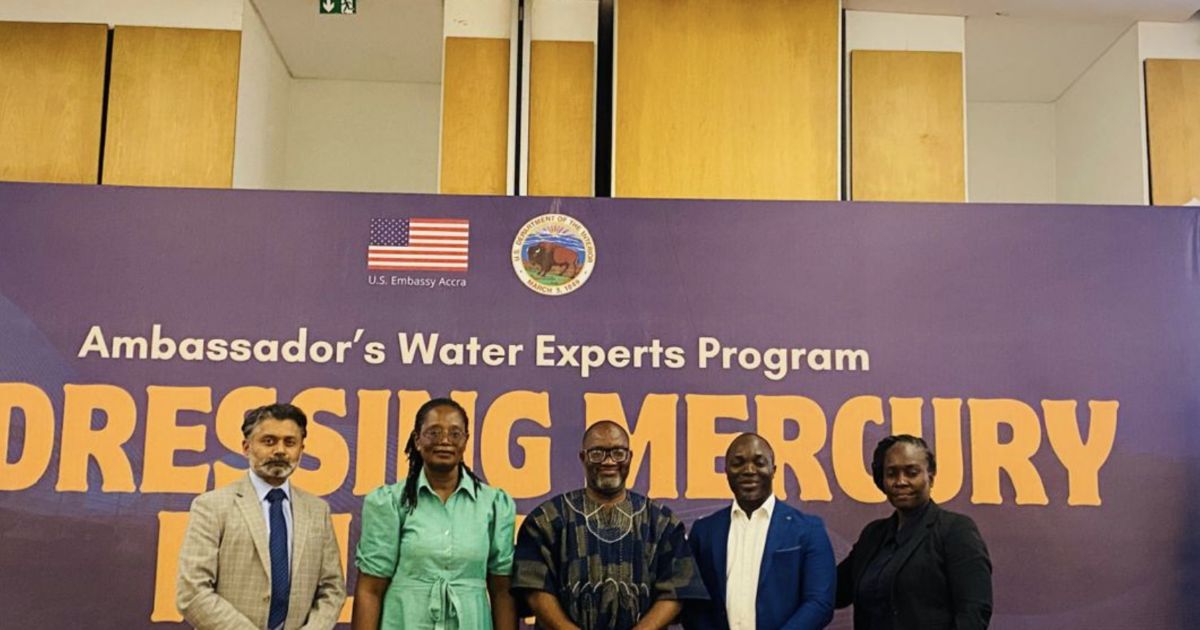
Ghana is receiving between 42.5 and 62 tonnes of mercury each year through illicit channels, according to stakeholders who spoke at a symposium organised by the United States Embassy in Accra. The mercury is primarily used in artisanal and small‑scale gold mining, a sector that supports more than 2.5 million people directly or indirectly.
Dr Sylvester Akpah, Chief Executive Officer of Smart Innovation Ghana Limited, explained that the mercury enters the country through unidentified routes and is widely used in mining communities in the Western, Ashanti, Eastern and Central regions. He warned that unchecked use of the substance could jeopardise access to safe drinking water, especially in areas such as Tarkwa where environmental pressure is already high.
Akpah cited the absence of a dedicated national directorate to oversee mercury use and related controls in the mining sector as a key obstacle to effective regulation. He called for stricter enforcement of existing laws and for the adoption of gold‑catching technologies that can reduce or eliminate mercury use. Despite investments in importing such equipment, he noted that uptake remains limited.
Professor Daniel Nukpezah of the Institute for Environment and Sanitation Studies, University of Ghana, added that mercury is a heavy metal that does not break down in the environment. It can transform into methylmercury in aquatic ecosystems, where it accumulates in fish and enters the human food chain. He warned that exposure can occur through inhalation of contaminated air, consumption of polluted water and fish, contact with contaminated soil and participation in mining activities.
Nukpezah highlighted that atmospheric mercury concentrations in Ghana have risen by about 450 per cent above natural levels, according to findings from the United Nations Environment Programme. He urged the development of local capacity to monitor mercury pollution and to better understand its sources and pathways.
Ghana has ratified the Minamata Convention on Mercury, an international agreement aimed at protecting human health and the environment. However, enforcement remains a challenge, the speakers noted. The symposium, which ran for two days, brought together government officials, academics, civil society organisations, development partners and private‑sector representatives to discuss measures to reduce mercury use and promote environmentally sustainable mining practices.
Moving forward, stakeholders emphasised the need for stronger surveillance, better regulation, and the adoption of cleaner technologies to safeguard Ghana’s water resources and the health of its mining communities.