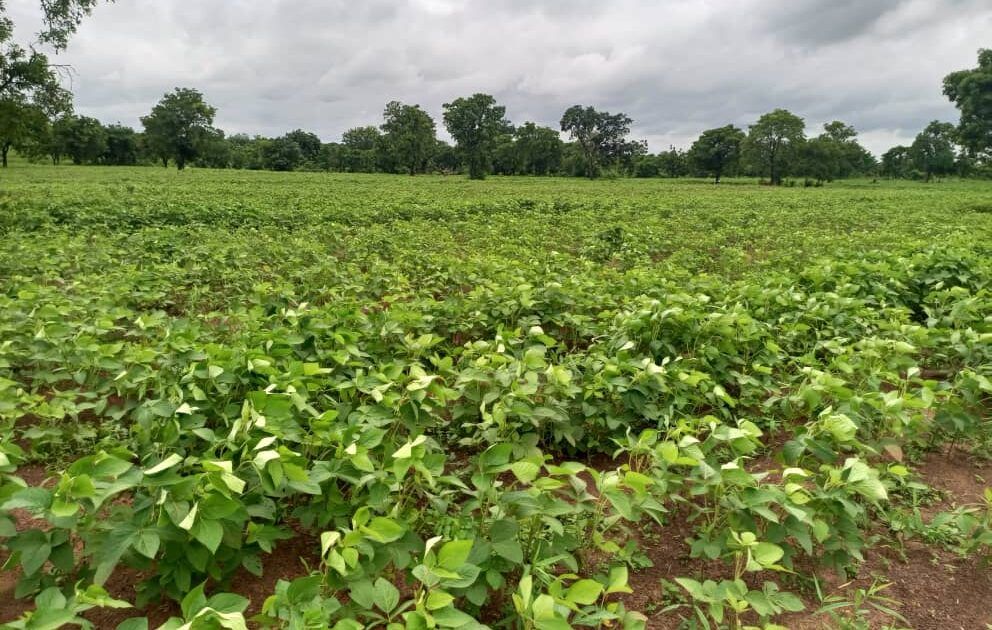
When the rains failed to arrive, Isaiah Yahaya Moses watched his soybean leaves turn brown, a sign that his crop was dying. The farmer, who relies on each season for his livelihood, had previously harvested fewer than 15 bags of soybeans from his five acres.
After applying HGA Africa’s Organic Farming Aid (OFA), Isaiah noted a dramatic change: the leaves turned green and he harvested 30 bags. “After applying the product, I realised that the whole thing had changed into green. Just seeing it alone will tell you that the product was good,” he said.
Similar stories emerged from other communities. In Ayenasu, Ejura Sekyeredumase, maize farmer Frimpong Manso struggled with stony soil and erratic rainfall. He had spent on conventional NPK and urea without seeing a return on investment. After adopting OFA, he observed healthier maize growth and increased optimism about his projected 20‑bag harvest from three acres.
In Konongo, garden‑egg growers Musah Zakari, Solomon Tettey and Amina Braimah recalled spending about GH¢500 on a bag of fertiliser and buying two bags without the expected results. Since using OFA, they report a greener garden and a “bumper harvest.”
Samuel Frimpong, a 64‑year‑old plantain farmer on a 70‑hectare farm at Agogo, has faced rising input costs, spending up to GH¢500 a day on labour during dry spells. After adopting OFA, his watermelon yield jumped from roughly 4,000 to 8,000 fruits, and he now harvests up to four truckloads instead of one.
Experts explain that healthy soils, enriched by organic matter, improve water retention and root development, allowing crops to access deeper moisture during droughts. Gilbert Osei, chief agronomist at HGA Africa, said at the fourth annual HGA Africa Forum in Tamale that well‑established root systems “can help plants access moisture from deeper soil layers when surface moisture becomes limited.”
These farmer testimonials suggest that OFA may enhance crop resilience to climate variability, potentially reducing the need for costly conventional fertilisers and irrigation.
While the product’s long‑term impact on soil health remains under study, the immediate gains reported by farmers across multiple regions highlight a promising avenue for climate‑adapted agriculture in Ghana.