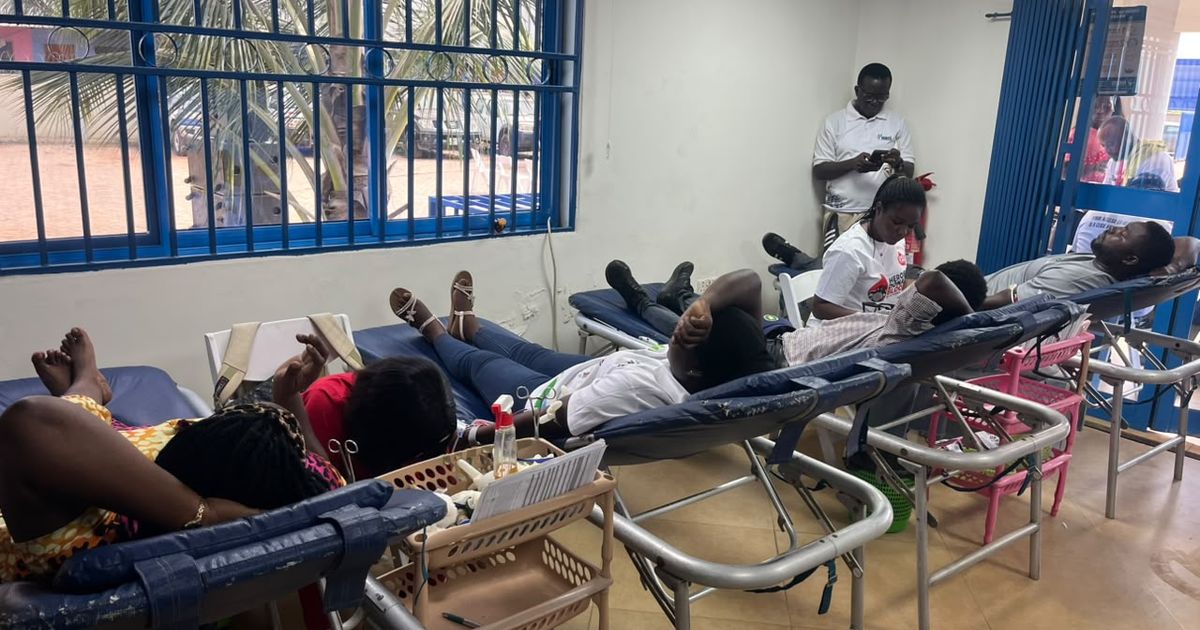
In a corporate social responsibility drive, the National Health Insurance Authority (NHIA) organised a blood donation exercise in Accra, bringing together staff from its Greater Accra regional and district offices. The initiative was aimed at supporting the Korle‑Bu Teaching Hospital Blood Bank and replenishing supplies for patients requiring transfusions.
NHIA Greater Accra Regional Operations Manager Harold Kalevor highlighted the event as a testament to the Authority’s commitment to compassion, humanity and service beyond its core mandate of facilitating access to quality and affordable healthcare. He stressed that blood is a precious resource that cannot be manufactured and depends on voluntary donations to save lives. “Every unit of blood donated has the potential to save lives,” he said, citing mothers experiencing childbirth complications, children battling serious illnesses, surgical patients and accident victims as among those who depend on blood transfusions.
Mr Kalevor praised the staff for their participation, describing their contribution as an expression of solidarity and self‑lessness. He thanked the management and medical team of Korle‑Bu Teaching Hospital, particularly the Blood Bank team, for their partnership, and encouraged eligible staff to embrace similar initiatives in the future.

Senior Blood Donor Organiser at the Greater Accra Regional Blood Centre of the National Blood Service, Felix Tetteh, noted that demand for blood remains high, with accident victims, pregnant women, cancer patients and people undergoing kidney dialysis among those requiring transfusions. He urged the public to make voluntary blood donation a regular practice, warning that inadequate donor participation continues to contribute to shortages at health facilities.
Tetteh explained that eligible donors aged 17 and above, weighing at least 50 kilograms and with adequate haemoglobin levels, can donate blood after screening and eating beforehand. Donors may give blood every four months, up to three times a year. He lamented that not enough people voluntarily present themselves to sustain supplies.
The National Blood Service supplies public and private hospitals nationwide and is expected to distribute approximately 300 units of blood daily. Blood has a shelf life of about 35 days under specialised storage conditions, making regular donations essential to replenishing stocks and meeting daily demand. Donors undergo screening to ensure safety for both donors and recipients, and the Service separates collected blood into components such as plasma, platelets and cryoprecipitate, allowing a single donation to potentially benefit up to three patients.

Mr Tetteh also disclosed that the Service has a tracking system enabling donors to know the hospital where their blood was transfused and, where possible, the recipient it helped save. He announced that the National Blood Service will honour committed voluntary donors at its National Blood Donor Day celebration on Monday at the Kwame Nkrumah Memorial Park. Donors who have given blood at least 45 times will be recognised, with prizes including cars, freezers and washing machines to appreciate their commitment to saving lives.
He cited a donor who had given blood 80 times since his senior high school days but was advised to stop at age 60 to safeguard his health, despite remaining healthy and willing to continue donating. Mr Tetteh reiterated the need for more people to embrace voluntary blood donation, stressing that regular donations every four months would help strengthen the national blood supply and prevent shortages that could threaten the lives of patients requiring transfusions.
He urged the public to consider blood donation an act of compassion and a practical way of helping save lives.