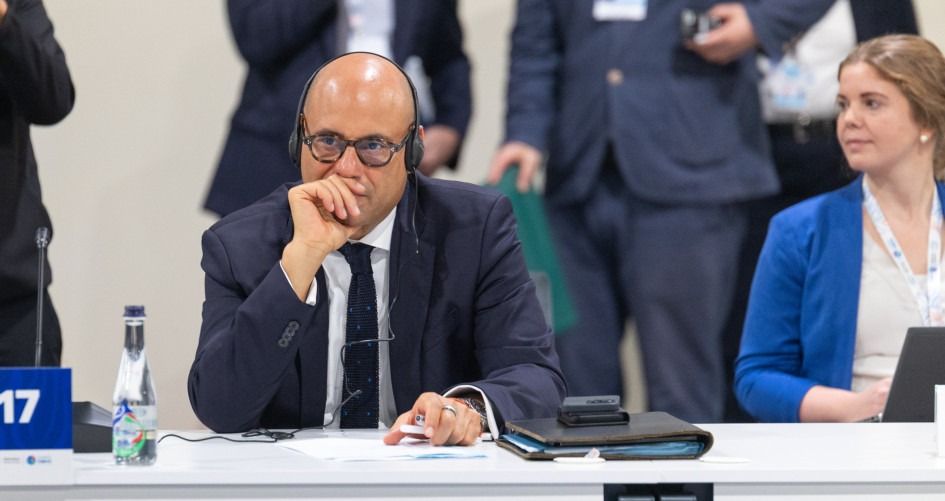
On 12 November 2026, UN Climate Change Executive Secretary Simon Stiell urged world leaders to accelerate methane reductions at the Leaders‑Level Non‑CO₂ Greenhouse Gases Summit in Antalya, Türkiye. He described cutting methane as one of the fastest, cheapest and most effective ways to curb near‑term global warming.
Stiell warned that climate‑related disasters are already costing lives, livelihoods and driving inflation, and that the situation will worsen as temperatures climb. “In a world of suffocating disasters, action on methane offers breathing space,” he said.
The executive secretary highlighted that about 70 % of methane from the oil and gas sector could be eliminated with existing technologies, many at little or no cost. In solid waste, 75 % of potential reductions could generate financial savings, with captured methane’s value potentially exceeding investment costs. He cited UNEP and the Climate and Clean Air Coalition findings that every dollar invested in super‑pollutant solutions could yield $15 in economic gains.
Stiell also pointed out the staggering economic loss from gas flaring, estimating 167 billion cubic metres of gas flared each year, worth roughly $54 billion in lost energy value. “That’s money going up in smoke,” he said.
He noted that over 90 % of parties to the Paris Agreement—accounting for about three‑quarters of global methane emissions—have included methane‑cut measures in their new Nationally Determined Contributions. The priority, he said, is to turn these commitments into action. He urged governments to set clear targets, mobilise public and private finance, build institutional capacity and tap the new Paris Agreement Crediting Mechanism, which already rewards landfill methane projects.
Stiell stressed that methane cuts must accompany rapid CO₂ reductions to keep temperature rises within safe limits. He added that for vulnerable nations, especially small island states, methane reductions buy critical time to adapt to climate impacts.
He concluded that super‑pollutant reductions present a “supersize opportunity” for climate protection, economic development and public health. “It’s low‑hanging for the climate, for economies, and for human health,” he said.