
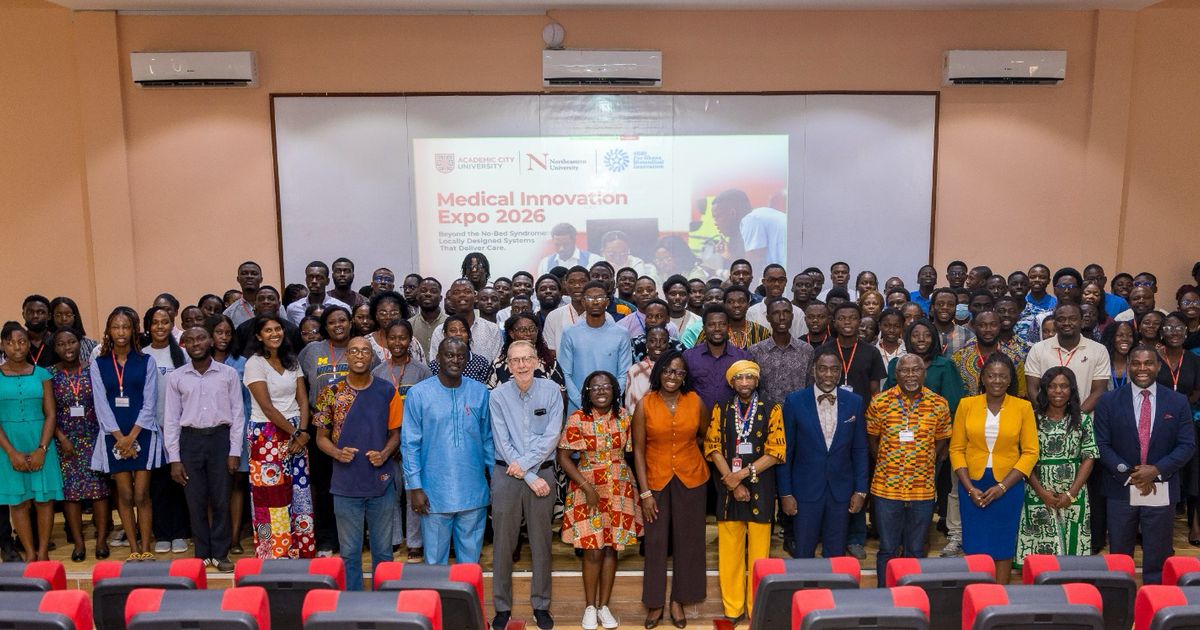
The Ghana Medical Innovation Expo 2026 concluded with a clear message from the Ghana Health Service (GHS): medical equipment should be designed from the drawing board with local health workers, ensuring devices meet Ghana’s specific needs and can be maintained by local engineers.
Dr Lawrence Ofori Boadu, Director of the Institutional Care Division, delivered the call on behalf of GHS Director‑General. He highlighted the Service’s new integrated bed‑management and referral coordination system, which provides ambulance crews with real‑time data on bed availability and facility capacity.
Ghana currently has about one hospital bed per 1,000 people, far below the World Health Organization’s recommendation of five. Boadu stressed that simply adding beds will not solve the problem; a coordinated system that directs patients to the right facility with the right equipment and skilled staff is essential.
He cited the tragic case of a 29‑year‑old engineer who died after being transferred between hospitals following an accident at Kwame Nkrumah Circle. An investigation revealed a chain of delays, including inadequate stabilisation and poor coordination among health facilities.
In response, the GHS has directed health facilities to stabilise emergency patients and has trained thousands of workers in basic life support. Bed‑tracking software is piloted at Korle Bu, Greater Accra Regional Hospital and Tema General Hospital, and bed‑management bureaus now exist in ten regions.
Boadu explained that the Bed Management Bureau will offer ambulance teams a dispatch console, referral coordination and a live view of available beds nationwide. He added that the challenge extends beyond physical beds to include skill and equipment.
He also announced plans for a National Teleconsultation Centre to provide expert advice to lower‑level facilities, aiming to reduce unnecessary referrals to major hospitals.
Dr Ibrahim Badejo, Senior Research and Development Director of External Innovation at Johnson & Johnson MedTech, urged innovators to focus on unmet clinical needs and to measure success by impact on patients and communities. He said Ghana could become an innovation hub if solutions improve clinical outcomes, affordability and access.
Academic City University’s Vice‑President of Academic Affairs, Dr Sena Agbodjah, noted that the BioInnovation Centre, a partnership with Northeastern University and Ghana BioInnovation, aims to develop medical innovations that enhance healthcare delivery. The expo’s theme, “Beyond the No‑Bed Syndrome,” was chosen to address systemic challenges that require more than just adding beds.
As the expo wraps up, stakeholders are encouraged to collaborate, validate ideas early and work with hospitals, industry and government to scale successful solutions across Ghana and beyond.