Professor of Educational Innovations in Science and Technology at Kwame Nkrumah University of Science and Technology, Dr. Eric Appau Asante, warned students that a focus on exams and certificates is insufficient for a rapidly changing world. He urged graduates to develop critical thinking, adaptability and problem‑solving skills, arguing that the traditional system prioritises rote learning at the expense of practical abilities.
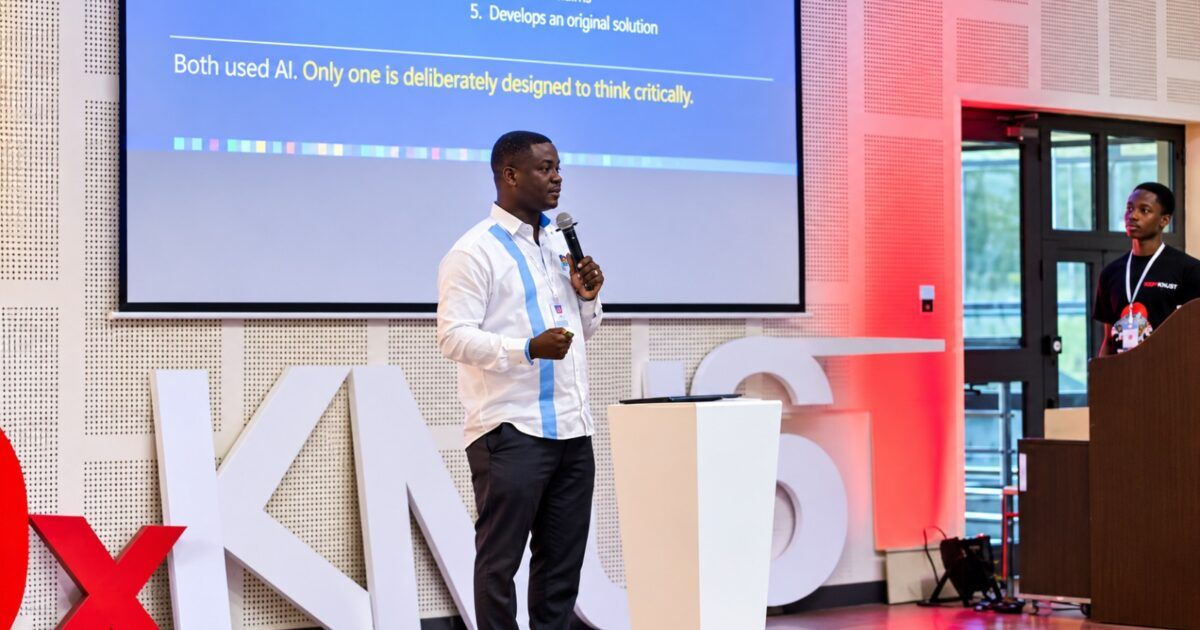
Speaking at a TEDxKNUST event themed “Pangolin: Architects of an Impenetrable Future,” the professor used the pangolin’s protective scales as a metaphor for resilience that can become a weakness if over‑reliant. “Protection is not the same as preparation. And survival is not the same as progress,” he said.
He challenged institutions to prioritise creativity and independent thinking over examination performance. “If your certificate disappeared tomorrow, what would remain of your education?” he asked, highlighting the need for graduates who can apply knowledge to unfamiliar situations.
On artificial intelligence, Dr. Appau Asante encouraged experimentation while warning against over‑dependence. “The danger is that human beings may become less willing to think because machines have made thinking appear optional,” he cautioned. He urged students to use AI to accelerate work but not replace their own judgment.
Co‑speaker Victoria Afua Agbai, a Ghanaian entrepreneur, echoed the call for practical experience. She noted that early exposure to technology is limited in Ghana and urged students to seek internships, volunteer work and other opportunities to gain hands‑on skills. “The world of work has changed, and the future many of us prepared for no longer exists,” she said.
Both speakers stressed that African graduates must identify systemic weaknesses, devise solutions and create innovations that meet real needs. The message is clear: academic credentials must be matched with the capacity to think critically and act responsibly in an AI‑driven era.