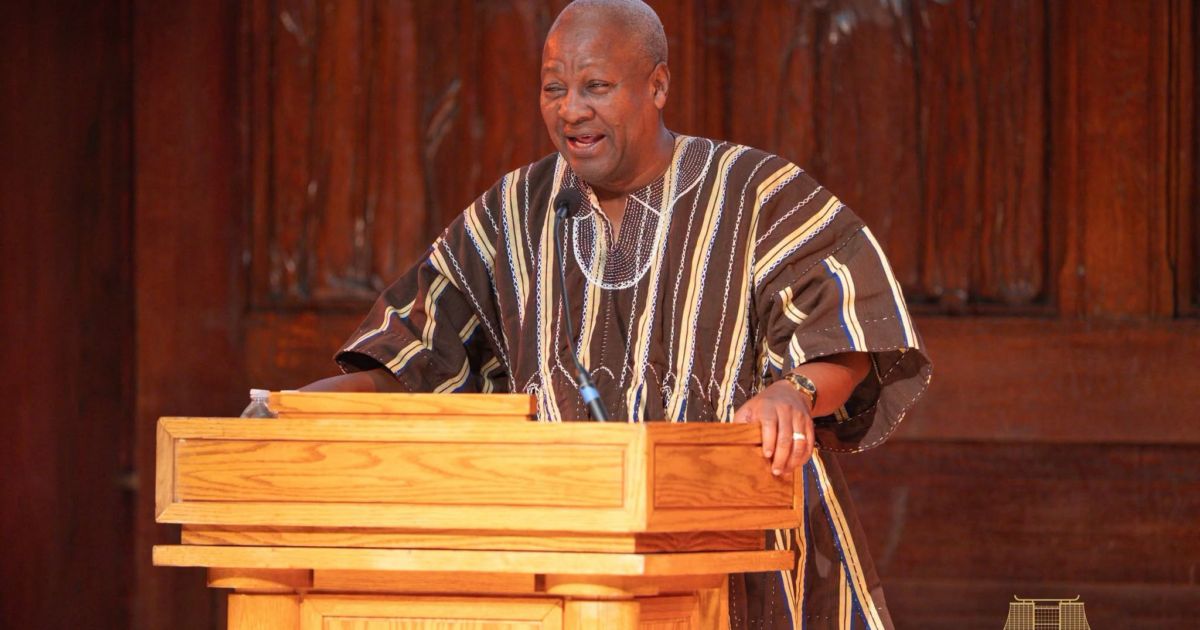
President John Dramani Mahama declared a proposed health compact from the United States humiliating after Cabinet raised concerns over its provisions on health data, counterpart funding and the regulatory authority of Ghana’s Food and Drugs Authority (FDA). The agreement, meant to replace some of the funding previously channeled through USAID, was reviewed by the Ministry of Health before being sent to Cabinet, where several clauses were deemed unacceptable.
Mahama said the document required Ghana to provide the United States with its pathogen profile and medical records, a demand he questioned: “Who takes another country's medical records?” He also noted that the compact would obligate Ghana to commit a specified amount of counterpart funding, and that medicines supplied under the programme would not be subject to inspection by the FDA. These points, he said, contributed to the Cabinet’s decision to reject the agreement.
Speaking at the Council on Foreign Relations in New York on September 25, Mahama said the compact was thrown out in record time, a speed he had never seen before. He added that the Minister of Health was directed to inform the US Ambassador of Ghana’s decision. The rejection follows the withdrawal and restructuring of US foreign assistance, which Mahama links to the Accra Reset initiative and a push for greater health sovereignty.
At a separate Accra Reset event in New York, Mahama launched “A Sovereign Future for Health,” a report recommending ways to strengthen health systems in the Global South and reduce dependence on external funding. He stressed that the goal is not to isolate Ghana but to build more equal and sustainable partnerships, with increased investment in local medicine production, vaccine research and health system capacity.
Other African nations have also voiced concerns over aspects of the new US health assistance arrangements. The rejection of the compact was reported earlier this year amid negotiations over new US health aid following the restructuring of American foreign aid.
What to watch: The Ghanaian government will likely explore alternative funding streams and strengthen domestic health procurement as it moves forward with the Sovereign Future for Health agenda.