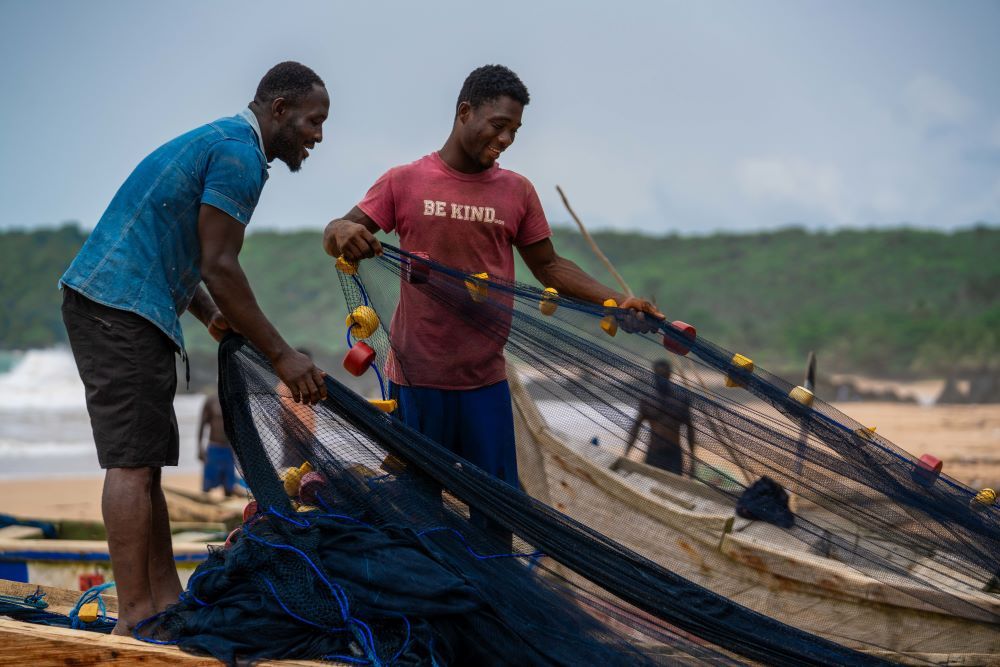
Kwesi Atta has spent more than 22 years fishing from Ezilinbo, a coastal village in the Jomoro Municipality of Ghana’s Western Region. The sea has fed his family and sustained his community, but the introduction of the Fisheries and Aquaculture Act, 2025 (Act 1146) has not yet reached many of the people it is meant to protect.
The Act doubles Ghana’s Inshore Exclusion Zone (IEZ) from six to 12 nautical miles, about 22.2 kilometres, to shield artisanal fishers from industrial trawlers that compete for the same grounds. Yet, Atta and many of his fellow canoe fishers were unaware of the law’s existence or its new limits.
Industrial trawlers routinely enter the expanded IEZ, especially during upwelling seasons when fish stocks surge. Vessel Monitoring System data from 2023‑24 show repeated incursions in specific hotspots. Without clear maps, monitoring, and credible sanctions, the protection remains largely symbolic.
Artisanal fishing accounts for over 70% of Ghana’s total fish production and supports an estimated three million people, with women dominating post‑harvest processing and trading. Fish supplies roughly 60% of the animal protein consumed in the country. When catches fall, the ripple effect harms processors, traders, transporters, canoe owners and consumers alike.
Atta argues that if fishers had known about the IEZ restrictions, they could better identify and report industrial violations. Community members echo his concerns, calling for sustained education on the Act, its prohibitions, and reporting mechanisms. The Fisheries Commission and related agencies must publish official maps, integrate coordinates into nautical charts and vessel navigation systems, and conduct outreach through local radio, community meetings and traditional leadership networks.
Enforcement is equally critical. The Commission must enhance Vessel Monitoring Systems, at‑sea patrols and surveillance, particularly in zones where violations have been documented. Sanctions must follow confirmed breaches, and fishers should be partners in decision‑making, not just beneficiaries, given their knowledge of seasonal patterns and local waters.
Ghana’s legislative step is significant, but its success hinges on industrial vessels respecting the new boundary, fishers understanding and using the protection, and violations being detected and addressed. For Atta, the expanded IEZ will only matter if it translates into safer trips, fewer incursions and sustainable catches that secure his family’s livelihood.