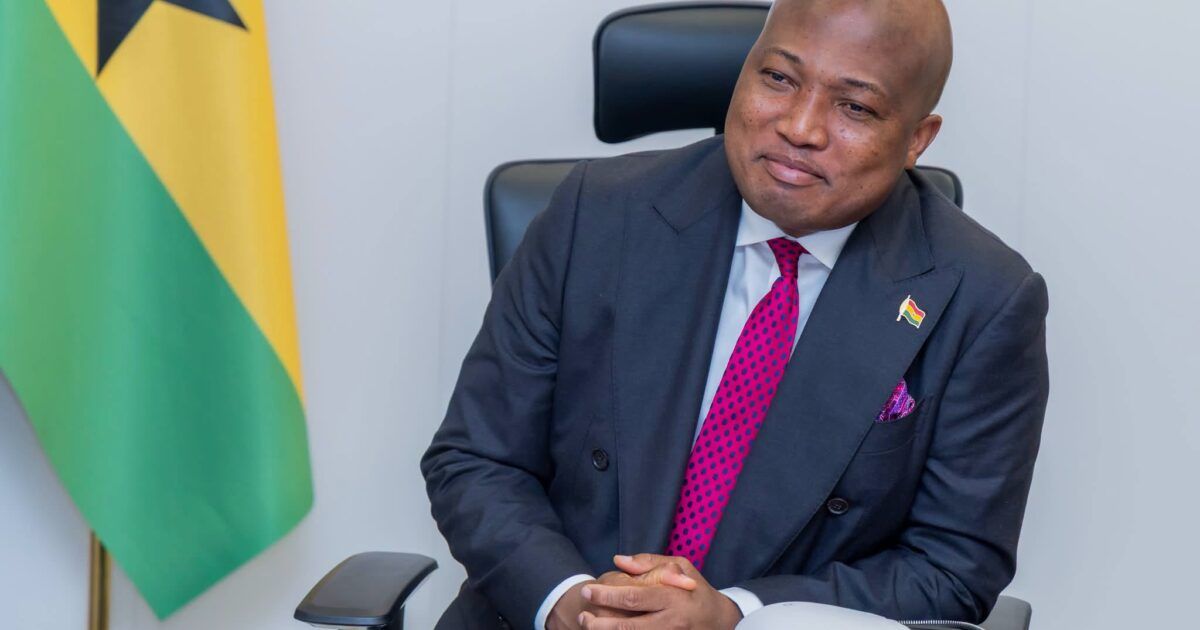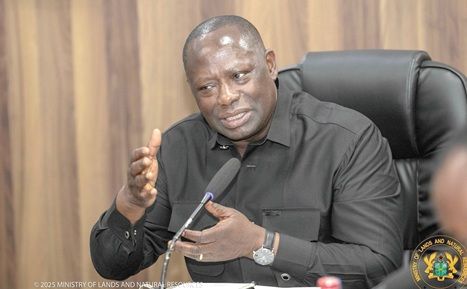
Minister of Lands and Natural Resources Emmanuel Armah‑Kofi Buah announced that Ghana will halt the export of raw minerals by 2028, a move aimed at keeping more value within the country. The policy will see at least 70 % of artisanal and small‑scale gold refined locally by December 2027, rising to 100 % by December 2028.
In addition, the government targets local processing of 50 % of manganese and bauxite by 2028, with full domestic processing expected by 2030. The minister said the country will build its own refineries, smelters and steel plants to replace the current export‑centric model.
Speaking at the Industrialisation Day celebration organised by the Trades Union Congress in Accra, Mr Buah highlighted that the New Economy Programme will allocate $1.5 billion to expand domestic processing capacity for gold, manganese, bauxite and lithium. A 24‑hour critical mineral processing enclave is planned for the Western Region, and new railway links will facilitate mineral transport.
Existing partnerships will be strengthened: the Ghana Gold Board has signed refining agreements with the Gold Coast Refinery and the Royal Ghana Gold Refinery, each capable of refining up to one tonne of gold per week. The Ghana Integrated Aluminium Development Corporation (GIADEC) is advancing an integrated aluminium industry, while the Ghana Integrated Iron and Steel Development Corporation (GIISDEC) explores iron ore deposits in the Oti Region.
Under the Green Minerals Policy, companies must assess domestic conversion of minerals to retain more value locally. The government also seeks to enhance local content by ensuring indigenous businesses gain procurement and supply‑chain opportunities.
Mr Buah stressed that success would be measured by local enterprises’ ability to win sophisticated contracts and by workers acquiring transferable technical skills. He added that reforms through a new mining policy and a proposed Mining Act before Parliament will further strengthen local participation.
Joshua Ansah, secretary‑general of the TUC, echoed the call for greater transparency in mineral contracts, export pricing and beneficial ownership, warning that illicit financial flows and opaque ownership arrangements erode government revenue. He urged workers and trade unions to be recognised as strategic partners in industrial policy formulation.
Ghana’s ambition to end raw mineral exports by 2028 represents a bold shift toward industrialisation, promising job creation, technology transfer and a more resilient economy.