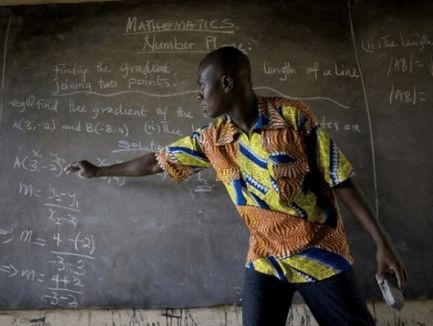
Every year more than 600,000 Ghanaian children sit the Basic Education Certificate Examination (BECE). In 2025, 603,328 candidates from 20,395 schools took the test, yet few realise that their grades are not a pure reflection of what they have learned. The West African Examinations Council (WAEC) employs a stanine grading system that ranks students against one another, with the top grade reserved for roughly the best 4% nationwide. A child who tops her school may still miss that top band, underscoring a system that equates success with another’s failure.
Education experts argue that this legacy of colonial schooling—where ranking and selection were tools for staffing colonial offices—has seeped into Ghana’s politics and social fabric. The colonial era saw only 8% of Gold Coast schools in 1914, focused on producing junior clerks and administrators. As British examination boards entered Africa in 1910, they institutionalised ranking to filter the few who could secure scarce positions. The exam culture born from this practice remains in place, despite Ghana’s independence in 1957 and 69 years of attempts to reshape it.
Proponents of a more collaborative approach point to traditional African practices such as Akan farmers’ nnoboa, a reciprocal labour exchange that keeps villages fed without ranking individuals. Rwanda’s monthly Umuganda and Kenya’s abolition of ranking in national exams are cited as African models that prioritise community outcomes over individual competition. Mauritius’ regional admissions for secondary schools further illustrate alternatives to nationwide ranking.
Ghana’s 2019 Standards‑Based Curriculum lists communication and collaboration as core competencies, yet classroom realities often mirror the old competitive model. Teachers reward individual achievement, and cheating spikes when school league tables are published. The Ghana Education Service’s categorisation of senior high schools into A, B, and C creates a hierarchy that fuels parental competition, with Category C schools reporting lower perceived teacher quality and fewer student selections.
Critics argue that true national progress requires moving beyond a winner‑takes‑all mindset. They call for a nationwide plan to equip every district with quality schools, equal teachers, and adequate resources so that students no longer need to race for limited seats. Such an approach, they say, would allow children to learn, live, and serve within their own communities, fostering unity without uprooting them from their roots.
As Ghana debates the future of its education system, the question remains: will the nation continue to let exam halls teach a lesson of competition, or will it embrace a model that values collective learning and shared success?