
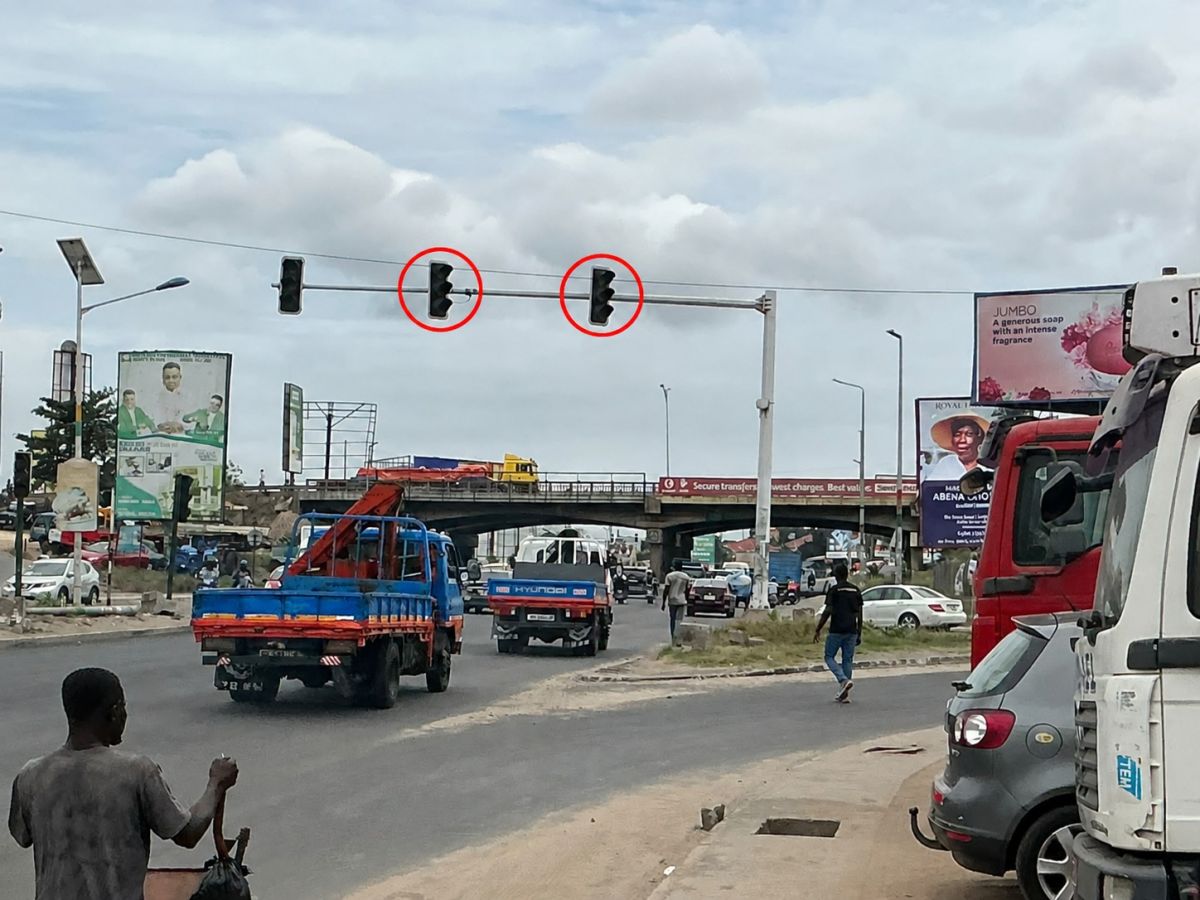
On September 28, 2026, CUTS International issued a statement calling on the Ghanaian government to postpone the full deployment of TRAFFITECH‑GH, set to begin on October 1, until traffic lights and road markings at enforcement sites have been inspected and repaired.
The public policy think tank said it supports using technology to improve compliance with road traffic rules and reduce crashes, but stressed that effective enforcement requires clear and functional road infrastructure.
“Government should hold drivers to the law. Government must also make the law clear and visible on the road,” CUTS said. “The purpose of TRAFFITECH‑GH is safer roads, not tickets arising from traffic lights drivers could not see.”
According to CUTS, several traffic lights across Accra are obscured by overgrown trees, damaged, displaced or out of service. At some junctions, only one of two lights works, while faded lane markings and stop lines add to driver uncertainty.
The organisation singled out the traffic lights on the Nsawam‑Accra Road just before the Apenkwa‑Achimota overhead bridge and at the Police Training Academy junction in Tesano. It said the lights at these locations have reportedly shifted out of clear view for approaching drivers, while the TRAFFITECH‑GH cameras appear correctly positioned.
“A camera’s clear view of a vehicle does not mean the driver has a clear view of the relevant signal or sign,” CUTS added.
CUTS urged the Ghana Police Service and the Department of Urban Roads to first inspect every enforcement location from the driver’s position before activating fines. The inspection should cover each affected lane, including visibility at night and during rain, and authorities should record the condition of every signal, sign, lane marking and stop line before fines are issued.
The think tank called for displaced traffic lights to be repaired and realigned, failed signal heads restored, vegetation trimmed and essential road markings repainted.
On speed enforcement, CUTS cited Regulation 211 of the Road Traffic Regulations, 2026, which sets general speed limits according to road type. It noted that Regulation 212 provides additional limits for particular vehicle classes, while Regulation 213(3) provides for speed cameras and safety signage. The organisation said these regulations do not remove the need to clearly indicate which speed limit applies at locations where cameras operate.
It urged authorities to place clear speed‑limit signs before every TRAFFITECH‑GH speed camera and wherever the applicable limit changes. A location should begin issuing automated fines for a particular offence only after the road features needed to obey that rule are working and visible.
Between January and August, 9,000 preventable road crashes were recorded, underscoring the urgency of the infrastructure review before the system’s launch.