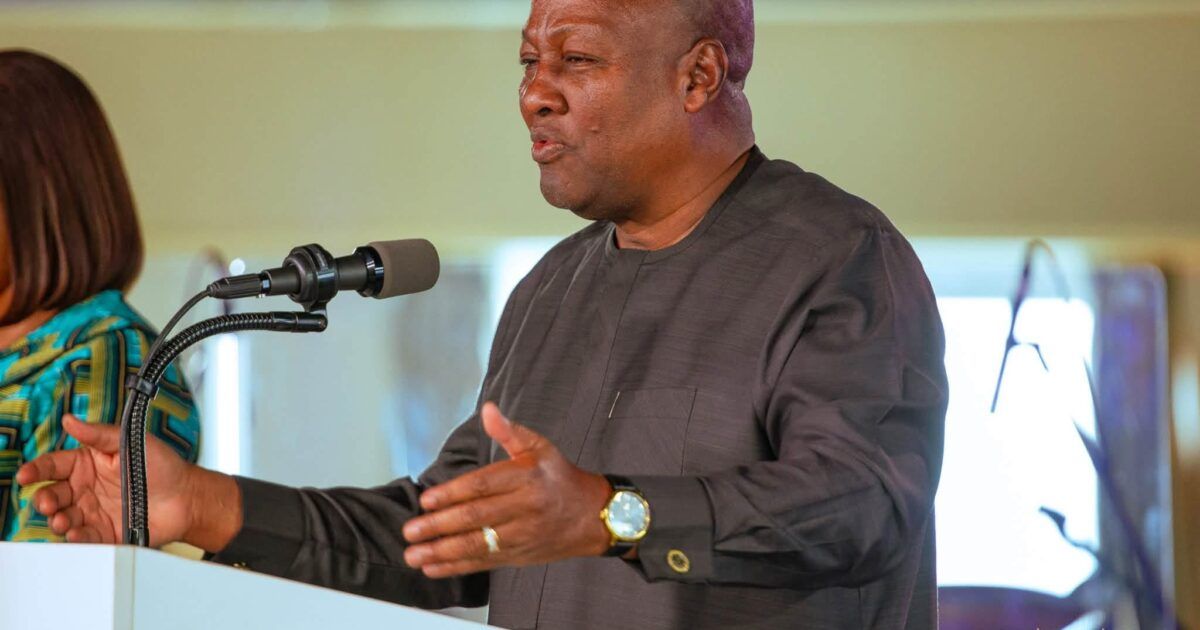
Former President John Agyekum Kufuor has urged political actors to protect the various arms of the state to strengthen the country's democratic dispensation, citing Parliament, the Judiciary, the media and independent constitutional institutions.
He noted that electoral victory does not confer ownership of the state. "An opponent remains a fellow citizen, and a temporary majority does not own the republic," he said.
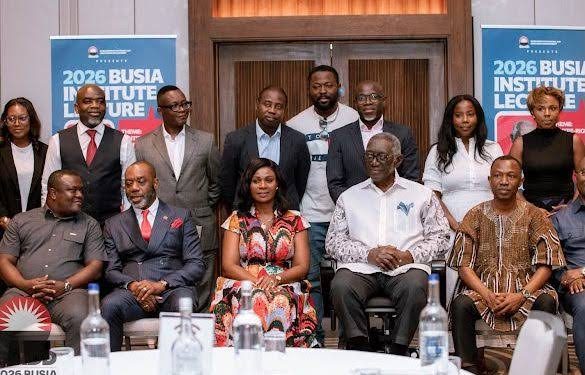
Kufuor was speaking at the 2026 Busia Institute Lecture in London last Sunday. The lecture, organised by the Busia Institute, was held under the theme "Centre-Right Political Thought in Africa: The Ghanaian Experience" and drew diplomats, Members of Parliament, Ghanaian professionals, members of the Ghanaian community in Britain and other invited guests.
Kufuor said the future credibility of Ghana's centre-right tradition would depend on whether its adherents continue to respect constitutional government, individual liberty, social responsibility, private enterprise and institutional restraint. Drawing a line from that earlier tradition to the Fourth Republic, he pointed to the repeal of the criminal libel laws, Ghana's completion of the Highly Indebted Poor Countries initiative, the National Health Insurance Scheme, the expansion of access to basic education and the Millennium Challenge Compact as measures through which his administration sought to translate principle into public policy.
A leading member of the New Patriotic Party (NPP), Dr Matthew Opoku Prempeh, who delivered the keynote address, argued that political traditions cannot continue to rely on the reputations of their founders or the memory of past electoral victories, and said each generation has to demonstrate through conduct, organisation and public service that it deserves the heritage it claims. "A political party earns its place not by winning offices, but by becoming an institution of memory, of ideas and of honest leadership," he said.
He called for an evidence based assessment of Professor Kofi Abrefa Busia's Second Republic, based on its constitutional philosophy, policy choices, development record, mistakes and the historical circumstances in which it governed. He also urged Ghanaians abroad to contribute more systematically to national development through expertise, professional networks, investment, technology and stronger institutional practices.
The Chairman for the occasion, Bernard Owusu, said democracy should not be reduced to elections, arguing that its durability also depends on citizenship, tolerance, institutional strength and respect for the rule of law.
The Executive Director of the Busia Institute, Dr Anane Agyei, said political traditions should be judged by the ideas they defend, the institutions they build, the manner in which they exercise public authority, and their effect on the lives of citizens.