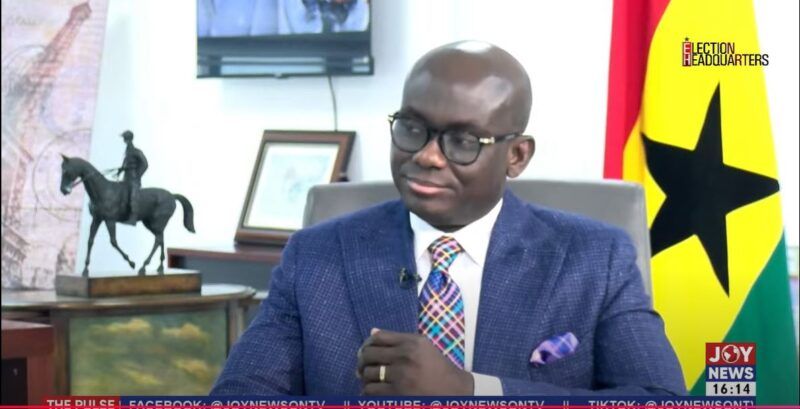
Former Attorney General and Minister for Justice Godfred Yeboah Dame has publicly accused the Economic and Organised Crime Office (EOCO), the Criminal Investigations Department (CID) and the current Attorney‑General of exploiting state power to punish political opponents.
In a statement released on Saturday, Dame described the use of arrests, investigations and prosecutorial discretion for political purposes as “the lowest point of law enforcement.” He called the conduct of the institutions over the past two years “gross and awkward exploitation” of their powers.
Dame’s comments come after the detention of Manhyia South Member of Parliament and lawyer Nana Agyei Baffour Awuah by EOCO. Mr Baffour Awuah voluntarily turned himself in on Thursday, October 1, after a High Court warrant authorised searches in connection with an ongoing investigation. EOCO said the MP was arrested after surrendering and was cooperating with investigators, who are probing allegations of criminal conspiracy, financial loss to SIC Savings and Loans, money laundering and tax‑related offences.
“On what account does Nana Agyei Baffour Awuah spend two nights in EOCO custody without bail when being investigated for a transaction from which he earned legal fees of GH¢2.2 million?” Dame asked. He added, “In any event, are the issues raised from his conduct in the matter criminal?”
Dame contrasted the current case with earlier instances where former ministers and MPs were granted bail and never spent time in custody. He cited Alhaji Collins Dauda, Cassiel Ato Forson and Dr Dominic Ayine as examples of individuals who, he said, were granted self‑recognisance bail despite facing serious allegations.
“It is correct to say that the investigative and prosecutorial authority of certain state institutions is being utilised to punish political opponents and settle parochial scores,” Dame said. He further accused law‑enforcement agencies of neglecting organised crime while focusing on political opponents, noting that narcotic trade remains a significant issue in Ghana.
The allegations raise questions about the independence of Ghana’s law‑enforcement bodies and the potential politicisation of criminal investigations. The case will likely be monitored closely by opposition parties and civil society groups concerned with the rule of law and human rights.