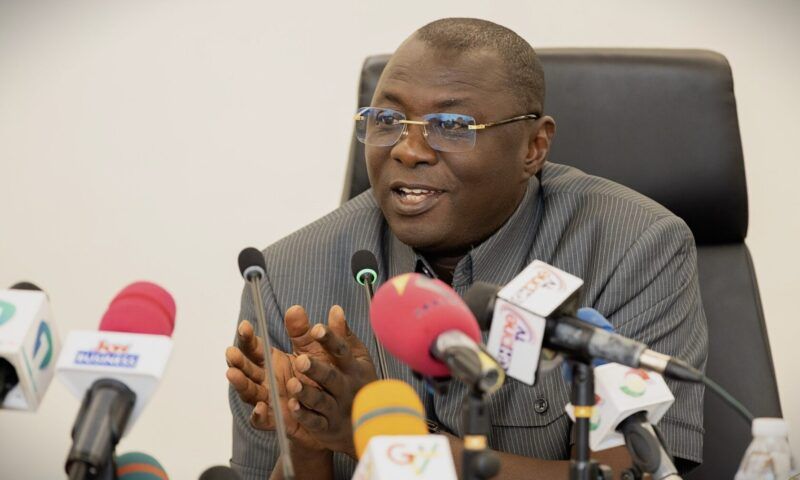
Former Finance Minister Dr Mohammed Amin Adam told the media that Ghana’s projected interest bill for 2027, amounting to GH¢61 billion, eclipses the combined allocations to four ministries he deems vital for job creation. The ministries – Agriculture, Energy, Tourism and Trade & Industry – together receive GH¢34 billion in the 2027 budget.
In a Monday interview with Evans Mensah, Dr Adam challenged Finance Minister Cassiel Ato Forson over the government’s borrowing stance. He contended that the rising debt stock and the projected interest bill contradict the minister’s claim of no new borrowing. “This minister is borrowing heavily, and that’s why interest payments for 2027 are projected to be GH¢61 billion,” he said.
Dr Adam also compared the interest bill to the allocations for the new economy and the Big Push initiatives, noting that GH¢61 billion exceeds the combined funding for those programmes. He used the comparison to question the scale of borrowing and its impact on spending for job‑creating sectors.
According to him, Ghana’s debt‑to‑GDP ratio climbed from 44 % at the end of 2025 to 47.5 % by October 2026, with the debt stock rising 18 % in that period. “If the minister is not borrowing, how can your debt stock increase by 18 %?” he asked. He stated that GH¢118 billion had been added to the debt stock, attributing about GH¢30 billion to cedi depreciation and the remainder to borrowing.
While acknowledging that debt restructuring and cedi appreciation helped reduce the debt stock in 2025, Dr Adam rejected exchange‑rate movements as a sufficient explanation for the subsequent increase. “The rest, what do you attribute them to? He borrowed,” he asserted.
The dollar value of Ghana’s debt also rose from $49 billion at the end of 2024 to $65 billion by October 2026, according to Dr Adam. He urged the minority to scrutinise these figures and challenge the government’s account of its borrowing.
What follows is a continued debate over Ghana’s fiscal trajectory, with the opposition demanding greater transparency on debt and spending priorities for job creation.