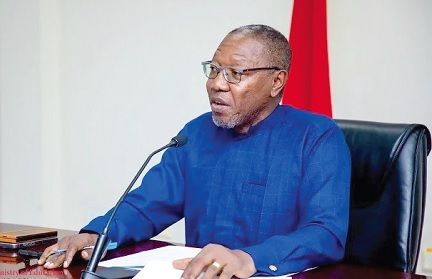
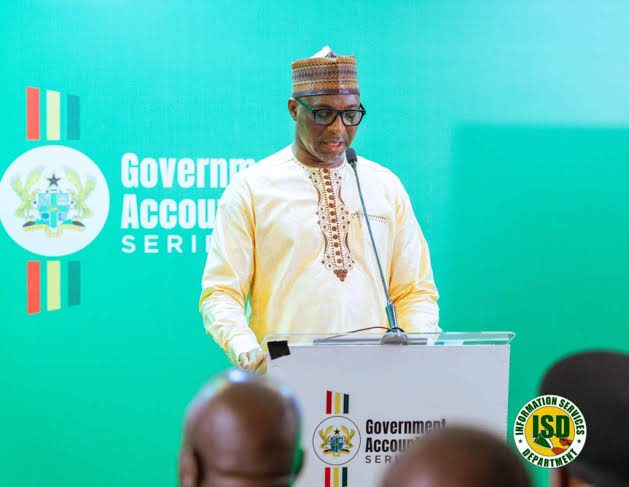
A total of 4,201 foreign nationals have been removed from Ghana since 2025, with some deportees now attempting to re-enter the country through unapproved routes to avoid detection at monitored border posts, the Minister for the Interior, Mohammed-Mubarak Muntaka, has said.
He said gaps in Ghana's border-monitoring system were making the situation more difficult, with only 12 of the country's 48 legitimate crossing points equipped with biometric monitoring systems. Muntaka made this known on Monday, August 24, 2026, at a press briefing dubbed the Government Accountability Series.
According to him, six border posts are equipped with the Migration Information and Data Analysis System (MIDAS), while another six have the Personal Identification Secure Comparison and Evaluation System (PISCES), leaving 36 of the 48 legitimate crossing points without either system to monitor people entering and leaving the country.
Muntaka said the gap was being exploited by some foreign nationals previously removed from Ghana. "Sometimes when we remove people and they know they'll pick their fingerprints, when they are coming back, they won't come back through Aflao or the like because they know that if they pass there, they'll be caught because they'll be put on the stop list," he said. "So they try to use the unapproved routes."
He said government is strengthening surveillance along unapproved routes through mobile technology that will allow immigration officers to capture the biometric details of people encountered along such routes. "When they meet you, they'll just scan your hand and then and there get you onto the record," he said.
The minister also disclosed that 50 anti-ballistic cabins had been procured and were being strategically deployed to strengthen border security. He said the equipment included drones capable of monitoring areas up to 15 kilometres from a command centre, with 20 mobile units also available to support surveillance. He said unapproved routes were not limited to the Volta Region but also existed in the Western Region and parts of northern Ghana.
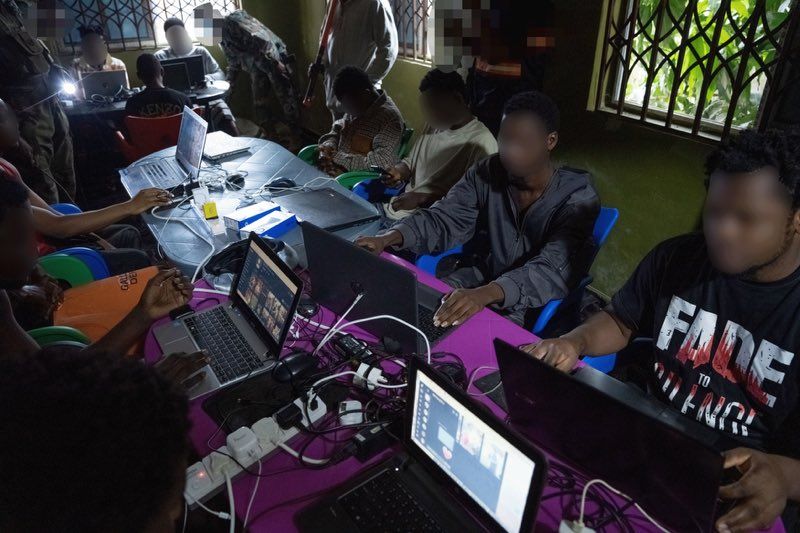
Muntaka said the Ghana Immigration Service had removed 2,281 migrant beggars from the streets and 774 other illegal immigrants involved in transnational organised crime by the end of 2025. By July 2026, a further 960 migrant beggars had been removed from the streets of Accra and Kumasi, together with 186 other illegal immigrants. The figures bring the total number of removals in the two categories to 4,201, comprising 3,241 migrant beggars and 960 other illegal immigrants removed during the two periods.
He said government is pursuing the exercise while taking into account Ghana's obligations under the ECOWAS Protocol on Free Movement of Persons and its diplomatic relations with other countries, aimed at reducing irregular migration while ensuring enforcement remains lawful and respects human dignity.
The minister's latest comments follow earlier warnings about unapproved border crossings. In June, he disclosed that 102 unapproved entry routes had been identified in the Volta Region alone, facilitating the movement of foreign nationals into Ghana without proper documentation, and said residents in some border communities were assisting foreign nationals to use the routes.
On Monday, Muntaka again appealed to Ghanaians to stop helping foreign nationals circumvent Ghana's immigration controls, saying some citizens were assisting foreign nationals to obtain Ghanaian identity documents even when the persons were not Ghanaian. He warned that such practices could undermine the integrity of Ghana's national identification system and make it harder for security agencies to establish who is lawfully in the country.
Muntaka said the government's tougher border measures were not intended to undermine Ghana's tradition of hospitality or its obligations under the ECOWAS free-movement regime, noting that Ghana's relative peace and stability continued to attract people from countries facing security and economic difficulties. At the same time, he said Ghana had a responsibility to protect its borders, maintain public order and safeguard national security and economic interests.
He said the main challenge was no longer a lack of political will, intelligence or leadership but the scale of the problem, and that logistical support was being mobilised to expand removals and strengthen border controls, with government expecting the impact of the measures to become more visible in the coming period.