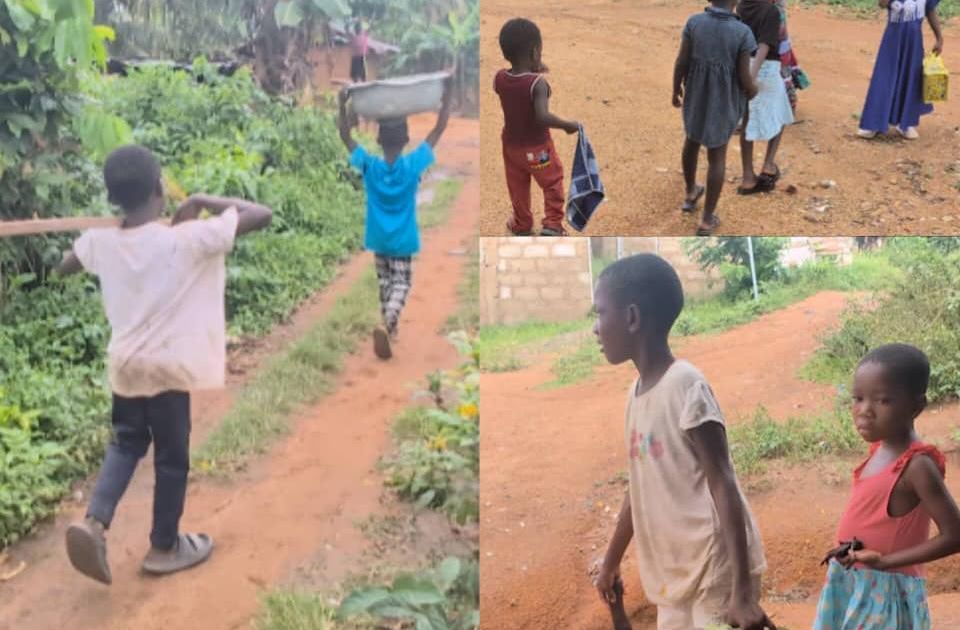
On Thursday, October 8, 2026, the community of Old Edubiase Methodist Basic School in the Adansi North District of the Ashanti Region was seen in a stark shift from classrooms to fields and streets. With no teachers present due to the nationwide strike, pupils were spotted carrying cutlasses and baskets to nearby cocoa and food crop farms, hawking boiled eggs and sachet water along the main roads, or simply playing football under trees.
One Primary Six pupil explained that teachers had told them to stay home until the strike was called off, prompting many to seek work or entertainment outside school hours. Another student lamented that the prolonged absence from school was negatively affecting their education, especially as the Basic Education Certificate Examination (BECE) approaches.
BECE candidate Shadrack Amuzu voiced the anxiety shared by many final‑year pupils: “Our mock exam is drawing near, and the teachers are on strike. We don’t know what will happen to us.”
Parents have also expressed frustration. Madam Yaa Nsia, mother of three pupils, warned that sending children to farms or leaving them unsupervised could expose them to social vices, teenage pregnancy and child labour. “The strike has forced us to send our children to the farm. Some of the children are just roaming around without going to school because of the strike. This is not good for their future,” she said.
The strike, launched by pre‑tertiary teachers over unmet demands for better conditions of service, has disrupted teaching nationwide. The Ghana Education Service and the Ministry of Education have met with unions such as the Ghana National Association of Teachers, the National Association of Graduate Teachers and the Coalition of Concerned Teachers, but no resolution has been reached.
Residents of Old Edubiase are calling on the Adansi North District Directorate of Education, traditional authorities and the government to intervene urgently so pupils can return to classrooms before the academic calendar suffers further damage.