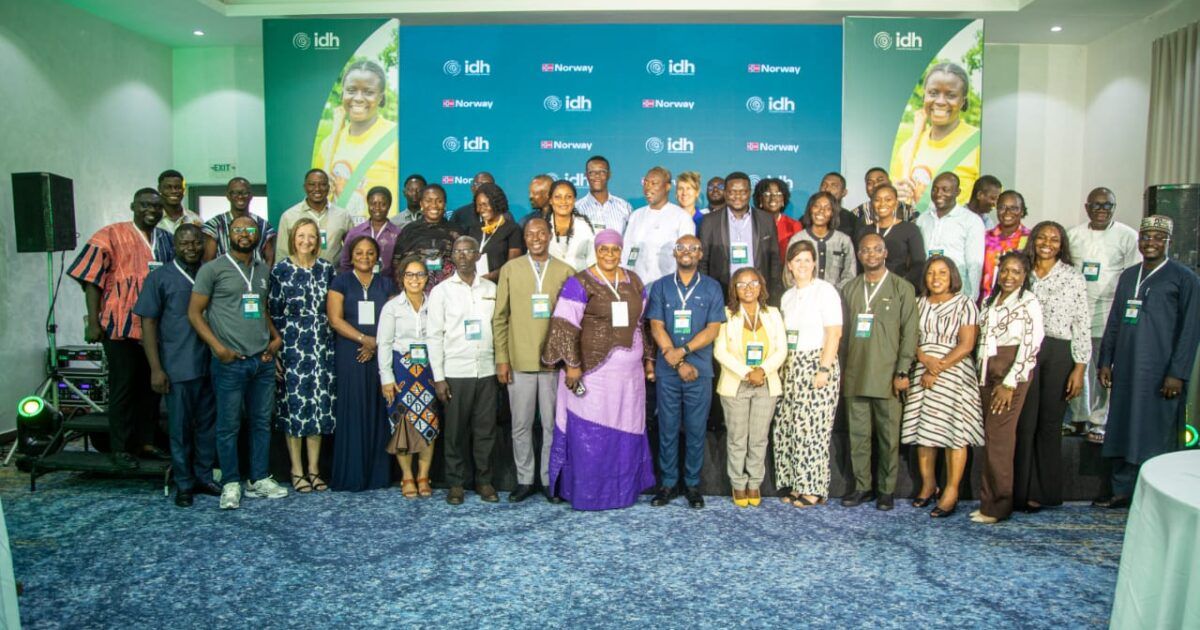
The Norwegian government has launched a €3 million Making Agrifood Markets Accessible (MAMA) programme to enhance market access for Ghanaian soybean farmers and fortify the country’s soybean value chain. The initiative, led by IDH and implemented with AGRA, IITA and YARA, will operate over three years across 16 districts in the five northern regions.
Ms Mascha Middlebeck, Programme Director for Africa Food System Transformation at IDH, said the programme builds on earlier interventions that improved access to quality inputs, mechanisation and structured markets. She highlighted that soybean has become a key crop for agriculture, food security, animal feed and rural incomes, yet smallholders, SMEs, women and young people still face limited finance, inputs and extension services.
Under the MAMA framework, IDH will coordinate the effort while AGRA leads policy dialogue and sector convening. IITA will provide agronomy, seed system and climate‑smart extension support, and YARA will supply inputs and crop nutrition. The programme aims to link 10,000 smallholder farmers—60 % of whom will be women—to major buyers, improve access to quality seeds and farming practices, and promote inclusive growth across the value chain.
Senior Programme Manager at IDH, Mr Rusmond Anyinah, noted that the project will create about 20,000 on‑farm and 750 off‑farm jobs, bolstering food security, soil health and the competitiveness of Ghana’s soybean production. He added that the initiative has broader national economic significance and will continue to work with government institutions, private‑sector actors and development partners.
Norwegian Ambassador to Ghana, Mr John Mikal Kvistad, said the support, funded by Norwegian taxpayers, seeks to improve market access, generate better returns for farmers and local businesses, and reduce dependence on imports. He stressed that the success of the programme hinges on sustained collaboration among government, farmers, businesses and development partners.
With the MAMA programme, Ghana takes a significant step toward expanding market access for soybean farmers, fostering job creation, and strengthening the agrifood sector’s resilience.