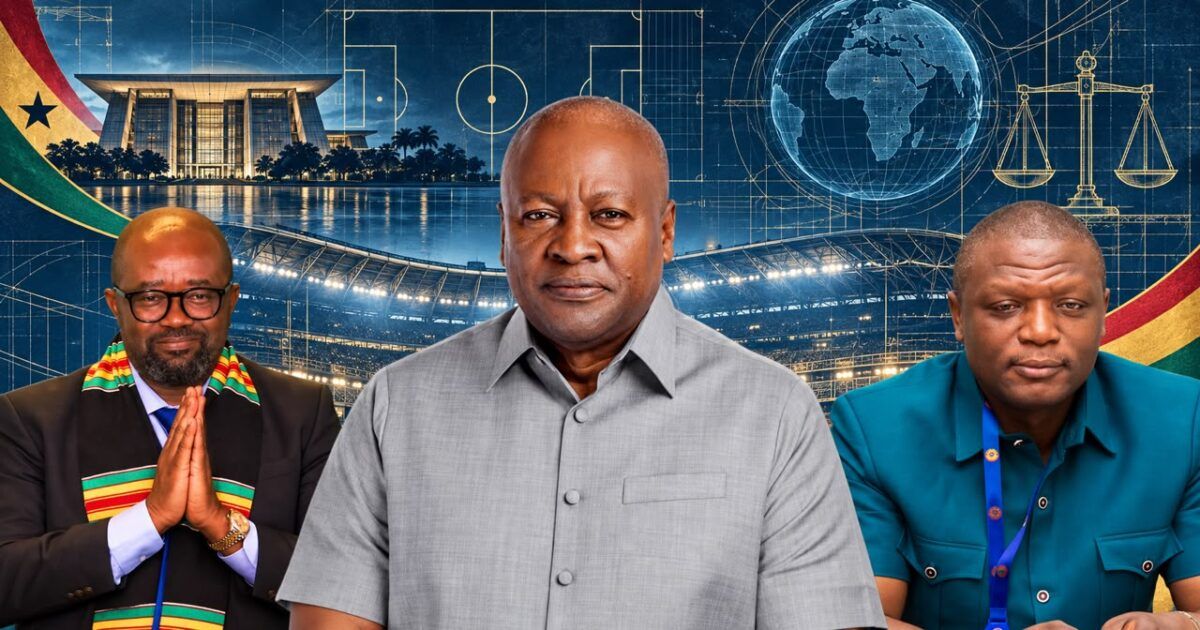
After Carlos Queiroz departed as Black Stars head coach, the Sports Minister convened the Ghana Football Association (GFA) and handed over seven directives aimed at overhauling its governance structure. The orders call for dissolving the existing technical and national team management committees, replacing them with separate men’s and women’s committees, and appointing a five‑member panel to assist in selecting the next coach, thereby preventing the GFA from unilaterally appointing a new head coach.
While the directives appear decisive and contain sensible reforms, they stop short of specifying who will sit on the decision‑making table, whose interests they will serve, or how checks and balances will be enforced. The GFA’s Executive Council, with twelve seats—comprising the President, five Premier League representatives, three Division One representatives, one Women’s Premier League representative and two regional FA chairpersons—remains entirely drawn from existing football constituencies, with no independent director or supporter representation.
Amendments to the 2025 GFA Statutes, which would introduce a Public Interest Committee chaired by a government appointee and a separate, publicly accounted bank account for national team sponsorship money, are still absent. The current statutes also lack performance contracts for management committees and fail to enforce the FIFA Standard Cooperation Agreement, a directive that was reintroduced eleven years later.
The Dzamefe Commission’s findings after the 2014 World Cup highlighted significant financial mismanagement, including US$122,500 of unaccounted cash, GH¢189,000 in unexplained catering costs, and US$900,000 missing from expected World Cup prize money. Yet the GFA’s governance framework continues to grant clubs 74% of the 124 delegates in its Congress, the body that can amend statutes, leaving them one vote short of the 75% majority needed to pass reforms.
Other nations have taken different paths. England’s Fan‑Led Review led to a board overhaul in 2023, introducing independent non‑executive directors and a new Football Governance Act in 2025. Spain’s Law 39/2022 established a supervisory commission chaired by Vicente del Bosque to oversee federations in matters of general interest. Ghana’s current model lacks such independent scrutiny, raising concerns about the effectiveness of any future reforms.
The next steps for Ghanaian football will hinge on whether the new directives translate into tangible changes and whether an independent regulator can be established to oversee the GFA’s operations and protect the interests of fans and the broader football community.