
The Driver and Vehicle Licensing Authority (DVLA) has started a pilot programme for its new Radio Frequency Identification (RFID)‑enabled number plates, a move aimed at strengthening vehicle identification and modernising Ghana’s registration system.
The exercise will involve a selected cohort of vehicles, allowing the Authority to evaluate and fine‑tune the plates, associated processes and operational needs before a country‑wide launch.
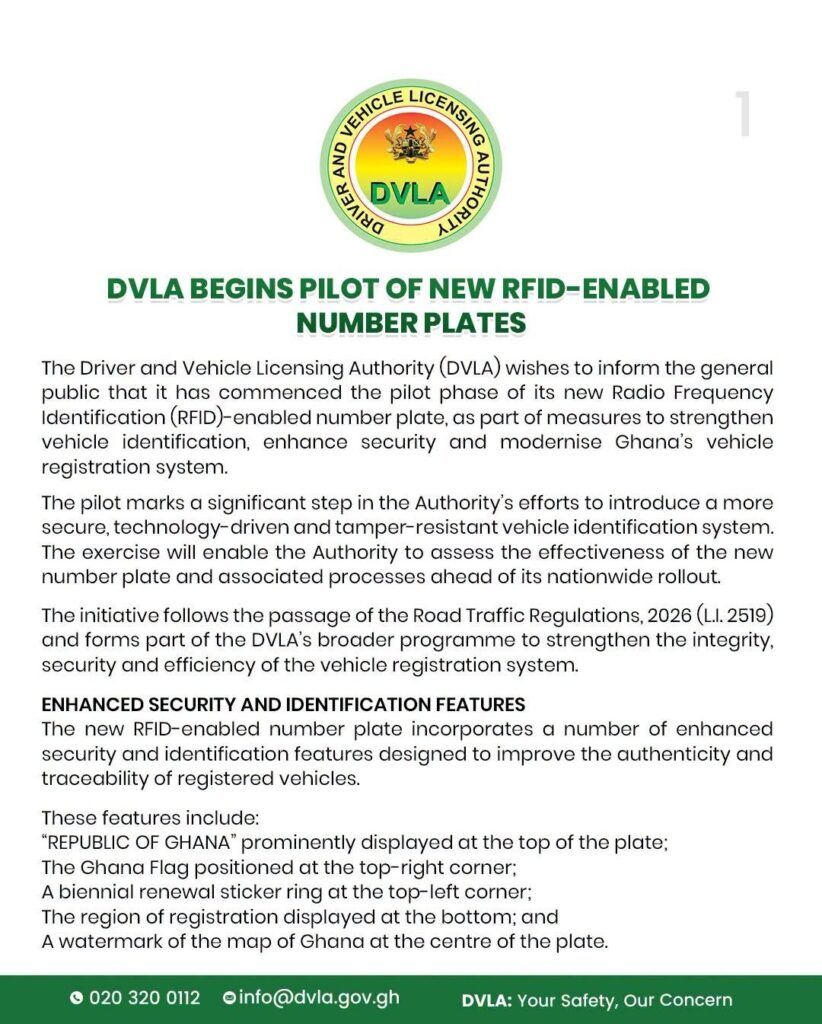
In a statement issued on Tuesday, September 29, the DVLA said the pilot represents a significant step toward a “more secure, technology‑driven and tamper‑resistant vehicle identification system.” The initiative follows the Road Traffic Regulations, 2026 (L.I. 2519) and is part of a broader programme to enhance the integrity, security and efficiency of vehicle registration.
Key features of the RFID‑enabled plate include a prominent “REPUBLIC OF GHANA” banner, the national flag at the top‑right corner, a biennial renewal sticker ring at the top‑left, the region of registration at the bottom and a watermark of the Ghana map at the centre. Registration details have also been redesigned: the number is now followed by four letters – the first two representing the Registration Centre Code and the next two a random identification mark that does not follow a sequential pattern – and the year of registration is omitted.
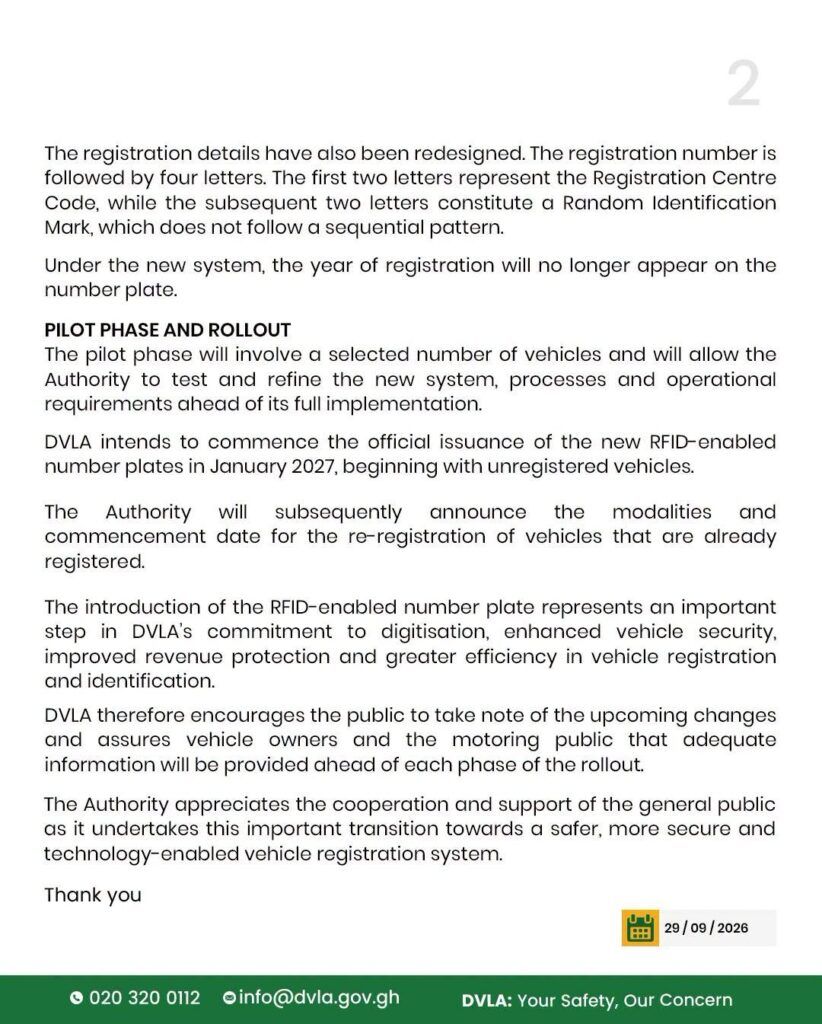
The DVLA said the pilot will enable testing of the new system before full implementation. Official issuance of the RFID plates is slated for January 2027, beginning with unregistered vehicles, with further details on re‑registration of existing vehicles to follow.
The Authority reiterated its commitment to digitisation, enhanced vehicle security, improved revenue protection and greater efficiency in registration and identification, urging vehicle owners and the public to stay informed about the upcoming changes. It also appealed for public cooperation as it moves toward a safer, more secure, technology‑enabled registration system.