
The Cyber Security Authority (CSA) marked its fifth anniversary today by launching the 2026 National Cyber Security Awareness Month (NCSAM) at the Cedi Conference Centre, University of Ghana. The event, themed “Securing Ghana’s Digital Finance Ecosystem: Building Trust Through Collaboration and Cyber Resilience,” saw the Director‑General, Divine Selase Agbeti, call for a coordinated cyber defence strategy across the country’s digital economy.
Agbeti said Ghana’s rapid digital transformation has opened doors for growth and inclusion, but it has also broadened the attack surface for cybercriminals. “We must now make an equally deliberate choice to secure it,” he said, stressing that protection cannot rest on any single institution. He urged banks, fintechs, telecoms, regulators, technology firms, law‑enforcement agencies and cybersecurity service providers to treat cyber risk as a business and national security issue, not merely a technical one.
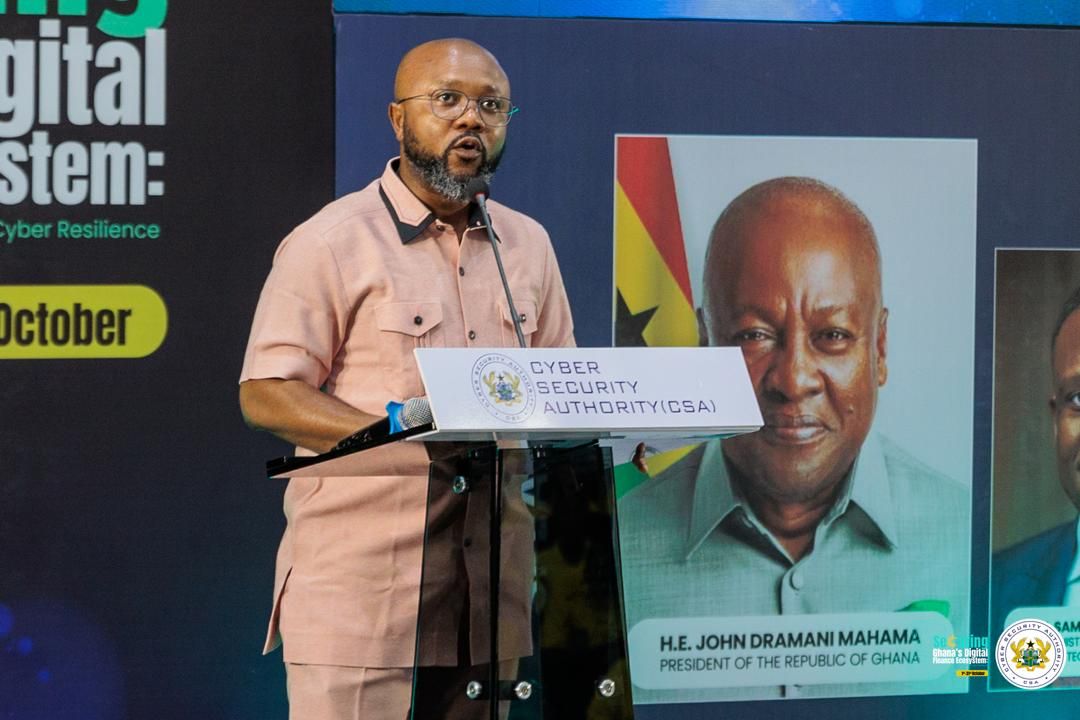
The Director‑General highlighted that the national Computer Emergency Response Team (CERT), run by the CSA, logged 3,876 incidents between January and July 2026, with online fraud accounting for roughly 47 % of those cases. He warned that repeated attacks erode public confidence in digital services, potentially stalling financial inclusion and wider digital transformation.
Representatives from the Ministry of Communication, Digital Technology and Innovations, the Ministry of the Interior, the Ministry of Tourism, Culture and Creative Arts, the Bank of Ghana and the University of Ghana were in attendance. The Bank of Ghana’s Head of Cyber and Information Security, Daniel Sowah Klu, announced a revised Cyber and Information Security Directive, a digital forensic laboratory and an industry‑wide fraud intelligence hub. The Deputy Minister for Communication, Mohammed Adams Sukparu, unveiled plans for a digital fraud monitoring system.

The ceremony also featured a commemorative digital plaque marking the CSA’s fifth anniversary. Agbeti said the Authority would continue partnering with law‑enforcement, intelligence, regulatory and international bodies to identify, investigate and disrupt cyber‑enabled crime. He reminded citizens that individual vigilance—pausing before clicking links, verifying details before transferring money, protecting passwords and authentication codes—is the first line of defence.
As the month‑long campaign begins, stakeholders are urged to move beyond generic information sharing and embed coordinated cyber defence into their daily operations. The CSA’s message is clear: cybersecurity is a team sport, and Ghana must play as one united front.