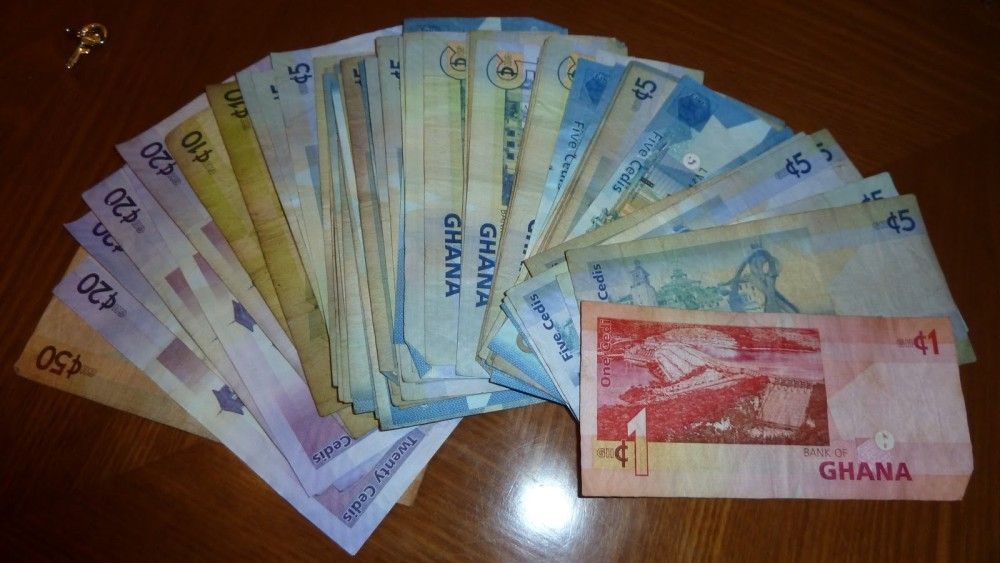
The Bank of Ghana has issued a stern warning against the practice of repairing and rejoining torn or soiled Ghana Cedi banknotes for re‑issuance or recirculation as a business activity. The advisory follows a viral video on social media that showed individuals using adhesive tape to mend damaged notes before putting them back into circulation.
In a statement, the central bank described the practice as improper, stressing that the Ghana Cedi is legal tender and an important national symbol whose integrity must be protected. It cautioned that any attempt to tape, glue, staple or otherwise alter mutilated banknotes could undermine the currency’s integrity and disrupt its proper processing within the cash cycle.
Bank of Ghana warned that improperly repaired notes are considered unfit for circulation and could damage ATMs and other currency‑processing machines. Such notes may also be rejected when presented for payment or exchange, potentially resulting in financial losses for members of the public.
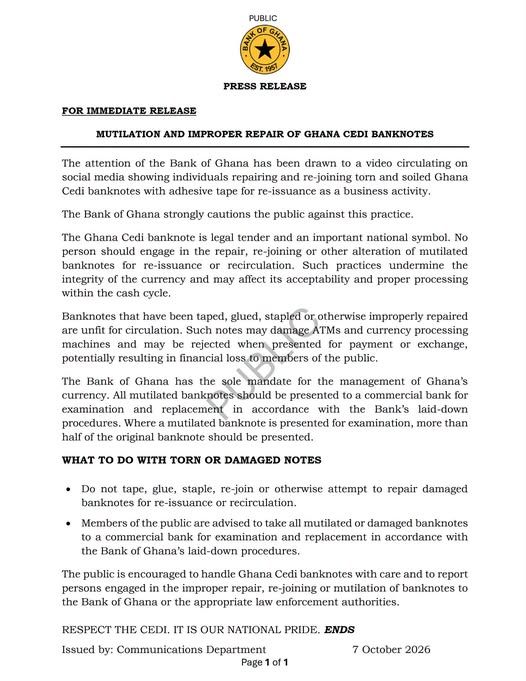
The Bank of Ghana reiterated that it has the sole mandate for managing Ghana’s currency and urged anyone holding a torn or mutilated banknote to take it to a commercial bank for examination and possible replacement under the central bank’s established procedures. The bank noted that anyone presenting a mutilated note for examination must provide more than half of the original banknote.
The central bank urged the public not to attempt to repair damaged notes themselves before presenting them to a bank. It also encouraged the public to handle Ghana Cedi banknotes carefully and report individuals involved in the improper repair, re‑joining or mutilation of banknotes to the Bank of Ghana or the appropriate law‑enforcement authorities.